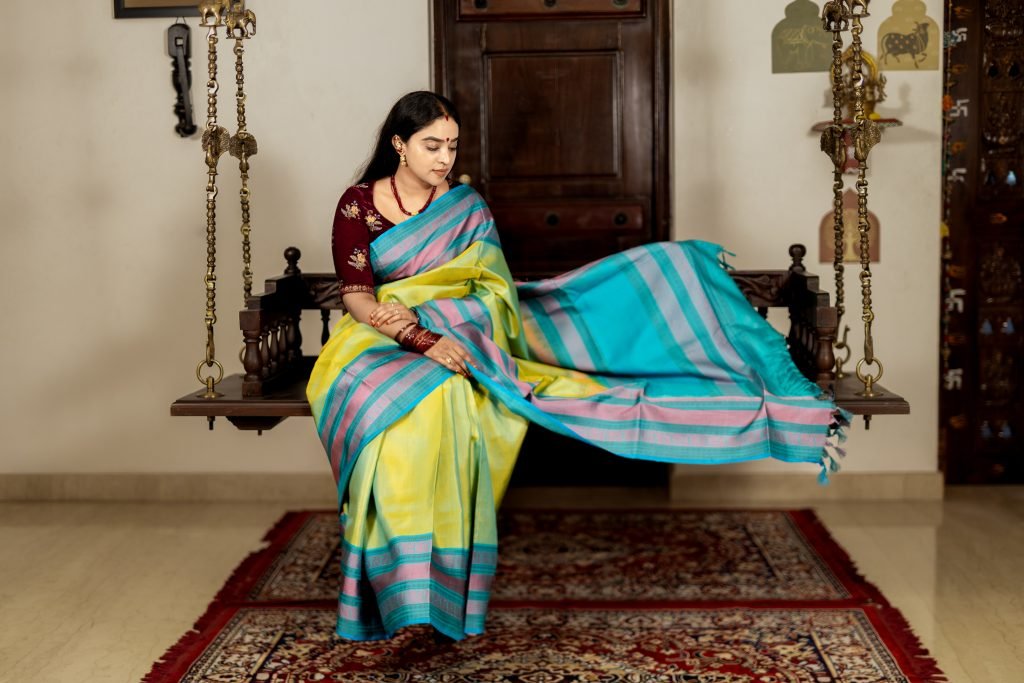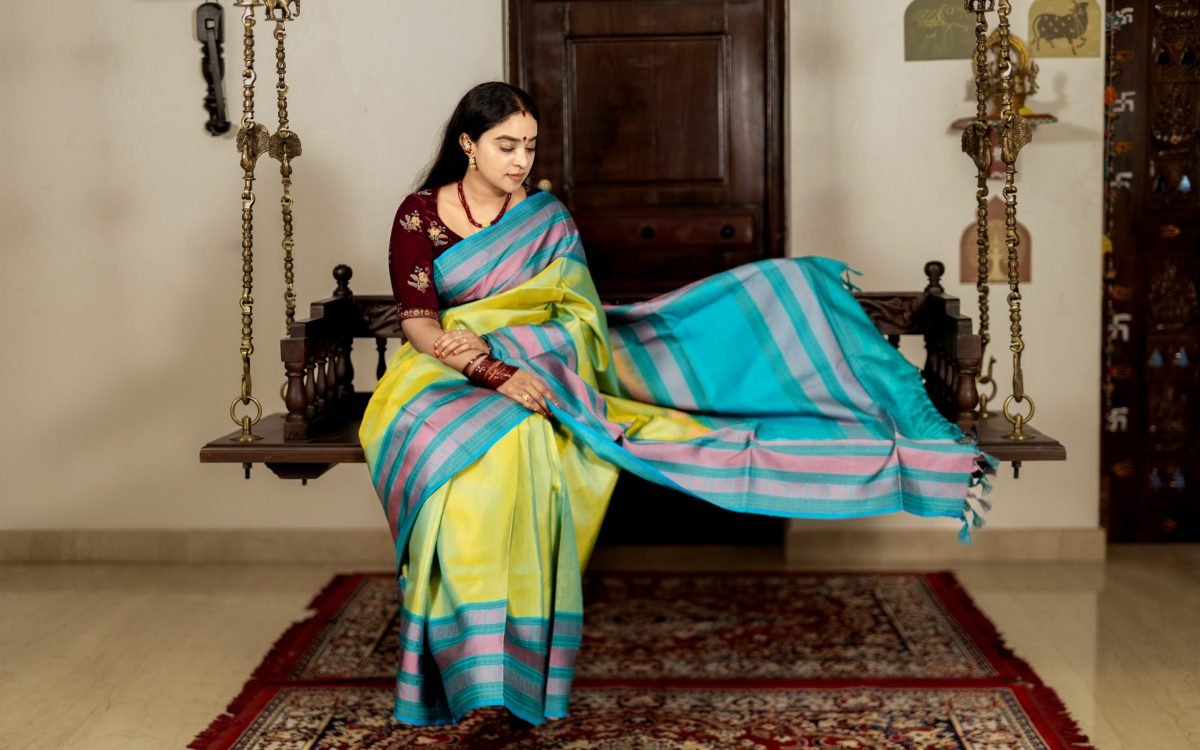
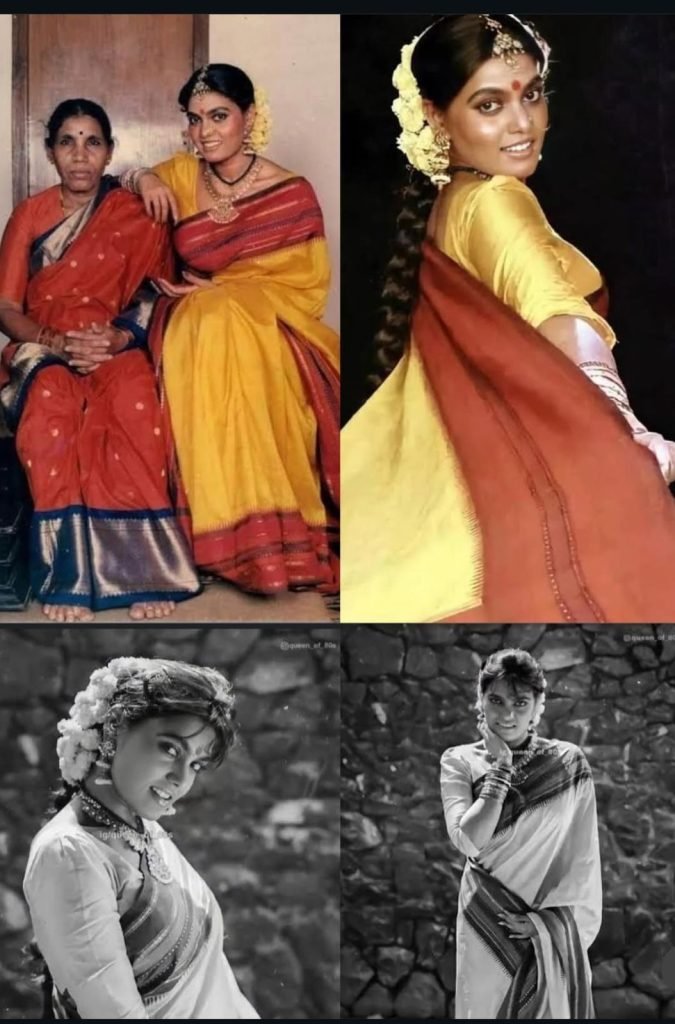
When most people think of sarees, they imagine tradition—but for Amrutha, sarees are a bridge between the past and the present. As the founder of Seelaikaari, Amrutha has transformed her passion for vintage silk into a thriving brand that celebrates India’s rich handloom heritage while empowering the artisans behind it. From the glimmering threads of Kanjeevaram silks to designs inspired by screen legends like Saroja Devi, Jayapradha and Sridevi, every piece tells a story. In a world racing toward fast fashion, Amrutha’s vision is refreshingly deliberate: to make exquisite, handcrafted sarees accessible to a modern audience, without ever compromising on the legacy and craftsmanship that make them timeless. By Sunethra Selvam
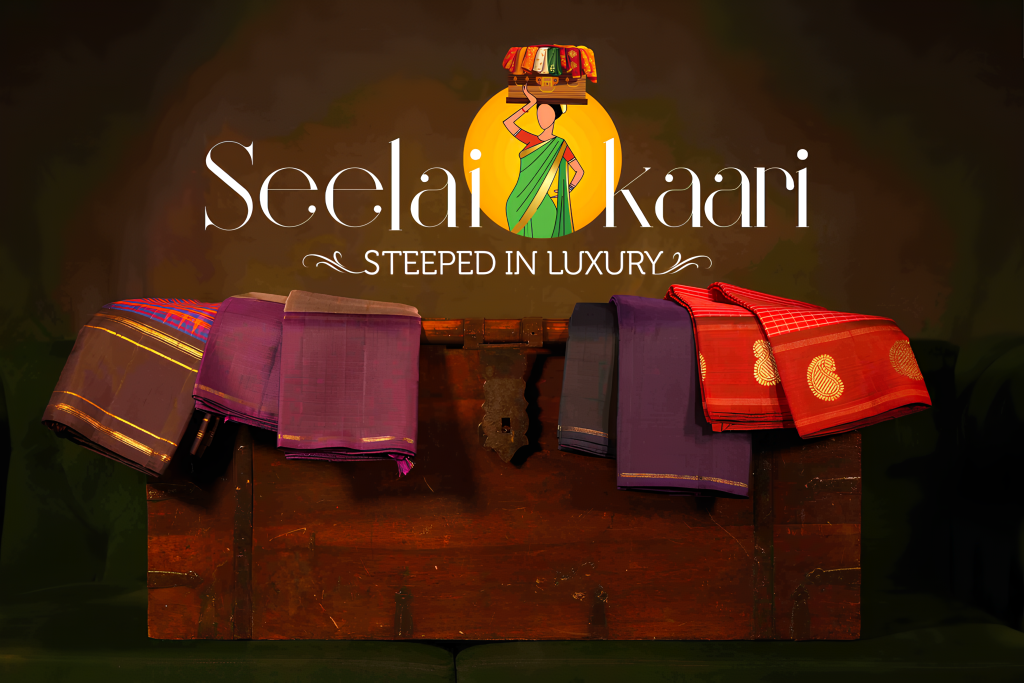
Seelaikaari stands as a quiet but compelling reminder of the artistry woven into India’s cultural fabric. Rooted in the timeless elegance of handwoven sarees, the brand partners with master artisans across the country to revive techniques passed down through generations. What emerges from their looms is more than clothing—it’s a celebration of heritage, craftsmanship, and the enduring allure of tradition reimagined for the modern woman. Here is an interesting extract of a conversation had with the founder.
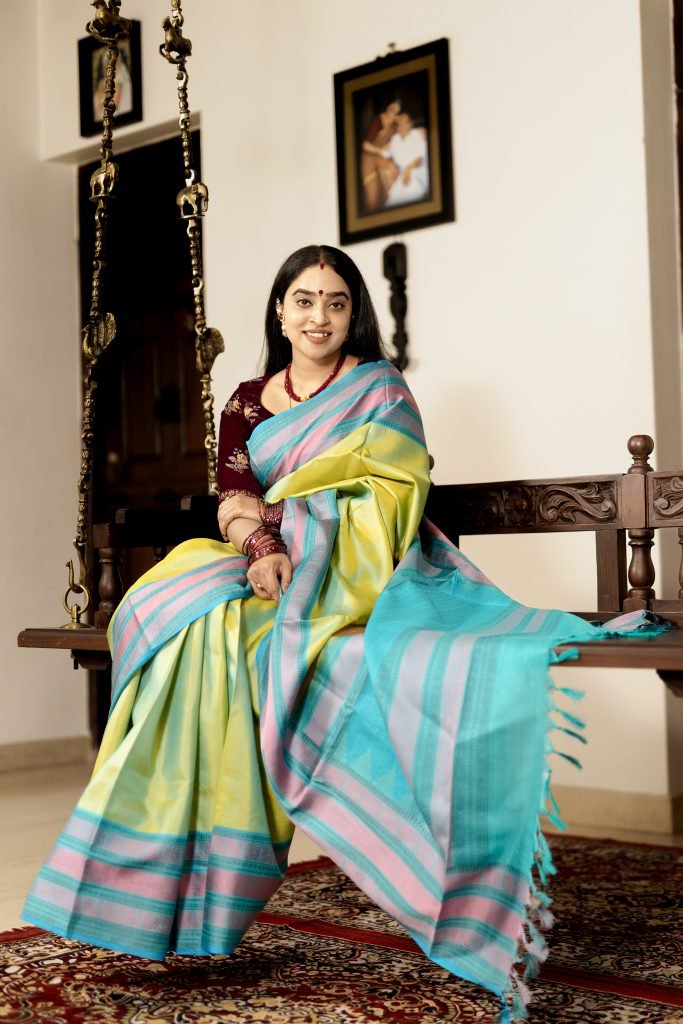
Q: Your journey with Seelaikaari began with a love for sarees. Can you tell us how that passion evolved into a full-fledged brand?
A: Seelaikaari really began with my mother’s sarees and my childhood memories around them. I grew up admiring her sarees, her style, and the way she embraced tradition. She has always loved dressing up and watching her sparked my own fascination with silk sarees and the stories they carry. That early admiration shaped my desire to build something rooted in tradition and craftsmanship. And it was my husband who encouraged me to turn that passion into a business—so that’s how Seelaikaari came to life.
Q: Tell us a little about yourself.
A: I’m from Chennai, and in every sense, I’m a true Chennai girl. I completed my degree in Visual Communication, and I’ve always been drawn to design. In the beginning, I imagined starting my own boutique, but like many girls, life took a different turn—my parents got me married, and that marked the start of a whole new chapter for me.
Q: Was there a particular moment or experience that made you realize you wanted to focus on vintage and handloom sarees?
A: For me, a saree is an emotion—so much more than just an outfit. It’s woven into every stage of a woman’s life. When a girl enters womanhood, it begins with a saree. Weddings, baby showers, and every auspicious moment are marked with sarees. Even the gifts we exchange during these occasions are usually sarees, not western wear. I’ve always felt deeply connected to tradition, so choosing to work with vintage and handloom sarees felt natural and close to my heart.
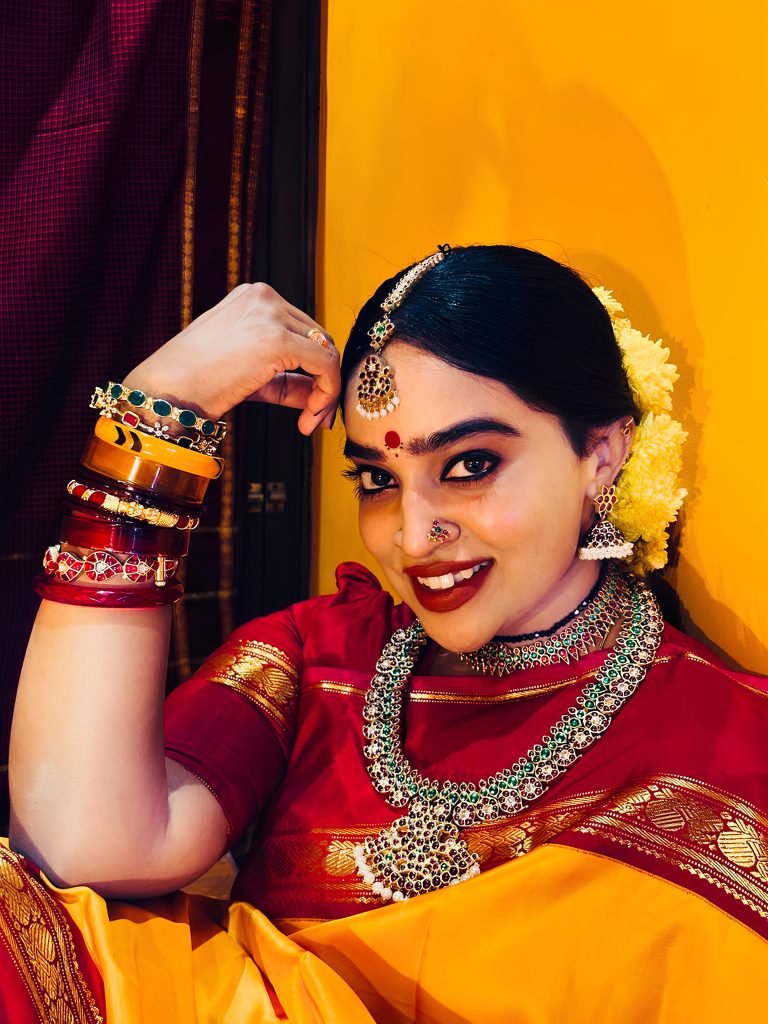
Q: Do you remember the first time you wore a saree? How did you feel? We’d love to hear that memory.
A: My very first saree was one of my mother’s. As a child, I loved pretending to be a teacher—so I’d drape her saree, hold a ruler, and act out the role with full enthusiasm. It was my favourite game. But the first time I officially wore a saree was during the rituals and celebrations that mark a girl’s puberty. That moment felt special and meaningful, almost like a rite of passage into a new phase of life.
Q: Your brand celebrates heritage textiles. What does preserving these traditional weaves mean to you personally?
A: Today, many people are moving toward power loom fabrics, so I feel it’s important to create awareness about handlooms. Weaving a saree is no simple task—it usually takes three to four artisans and nearly 15 days to complete one piece. And for techniques like Korvai weaving, the effort and time required can easily double. Unlike power looms where machines take over the work, handloom weaving depends entirely on human skill. It’s a craft that sustains the livelihoods of many families. For me, preserving these traditional weaves is about supporting those artisans and keeping our textile heritage alive.
Q: How do you balance staying true to tradition while also appealing to modern fashion sensibilities?
A: To me, traditional and modern styles are two different worlds, but they can coexist beautifully. My personal preference will always lean toward the traditional, especially sarees—but that doesn’t mean I don’t enjoy wearing western or contemporary outfits too. I believe you can embrace modern fashion while still staying rooted in tradition. For me, tradition holds deep meaning, and it naturally becomes the foundation of my work.
Q: Supporting weavers is clearly close to your heart. How do you ensure your brand uplifts the artisans behind each piece?
A: When I started this brand, I made a conscious decision never to use power looms. While power looms are faster and more commonly chosen today, I knew I wanted Seelaikaari to stand firmly with the weaving community. My focus has always been on encouraging handlooms and supporting the families whose lives depend on this craft. By choosing vintage recreations and traditional techniques, I not only honour our heritage but also help sustain the livelihoods of the artisans who keep these traditions alive.
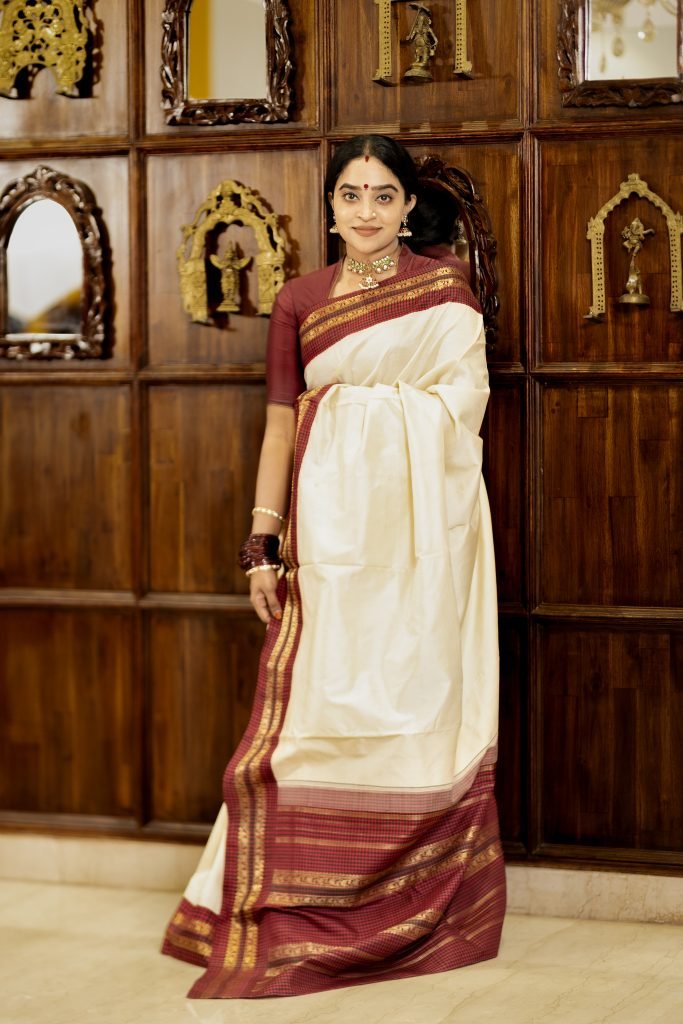
Q: Your USP is creating pieces that are truly unique and one of a kind, and I’m sure that comes with its own challenges. How do you deal with that?
A: It definitely isn’t easy. At Seelaikaari, we recreate only one piece from each saree, which ensures exclusivity—but it also means every creation takes a significant amount of time and effort. Many people don’t always understand the process behind it, and naturally, the pricing ends up being on the higher side because of the craftsmanship involved. Despite the challenges, I choose to keep it this way because uniqueness and authenticity are at the core of what Seelaikaari stands for.
Q. Ensuring access to high-quality handloom sarees must come with its share of challenges—especially today, with so much choice and variety available. How do you navigate that?”
A. It is definitely one of the toughest parts of what we do. Our sarees are crafted using authentic zari—real gold and silver—so maintaining that standard is paramount. But the reality is that the same designs are often replicated using duplicate zari, and that’s disheartening to see. Thankfully, discerning customers can still tell the difference. Still, it’s a challenge we’ve learned to live with in this industry.
Q. Your collections draw inspiration from the sarees of our mothers and grandmothers, from iconic actresses, and from vintage aesthetics. How do you translate that nostalgia into designs that still feel contemporary?”
A. In many ways, I don’t feel like I belong to this era at all—I’m deeply rooted in tradition. I’ve always been drawn to vintage everything, whether it’s films or fashion. I feel actresses of the past put so much effort into their style; even their hairstyles were far more varied and expressive. I’m utterly in love with the elegance of those earlier decades. Bringing that charm back, in my own creative way, is how I blend nostalgia with modern sensibilities.
Q. Looking ahead, where do you see Amrutha Seelaikaari in the next few years—both as a brand and as a platform for artisans?”
A. When I first started, my vision was to build an e-commerce brand. But as the journey unfolded, I moved into retail, and now I’m preparing to open my own store. In the years to come, I want Seelaikaari to be remembered as a brand that stands firmly for tradition—one that people instantly associate with authenticity, heritage, and the artisans who make it all possible.
Q. What was the inspiration behind the name ‘Seelaikaari’?”
A.I love this question! While travelling to my native town, I came across a deity named Seelaikari Amman, who even has a small temple dedicated to her. The temple is unique—there’s no idol; instead, there is a sacred trunk where devotees offer sarees. That instantly caught my attention. Being a spiritual person, I wanted a name that carried a deep traditional connection and reflected who I am. I tried several options, but none felt right. Finally, Seelaikaari just clicked. I sell sarees, I adore wearing them, and the name beautifully tied together my personal identity and the heritage I want the brand to stand for.