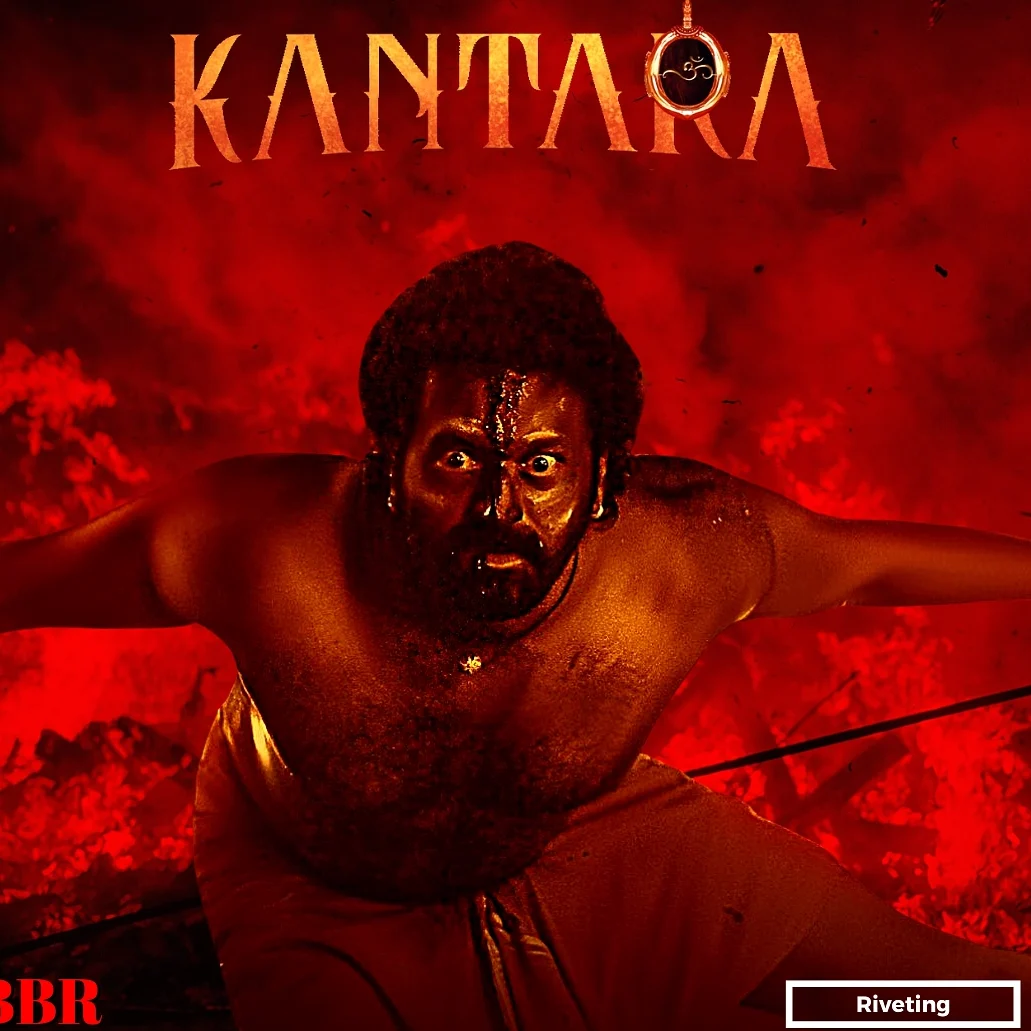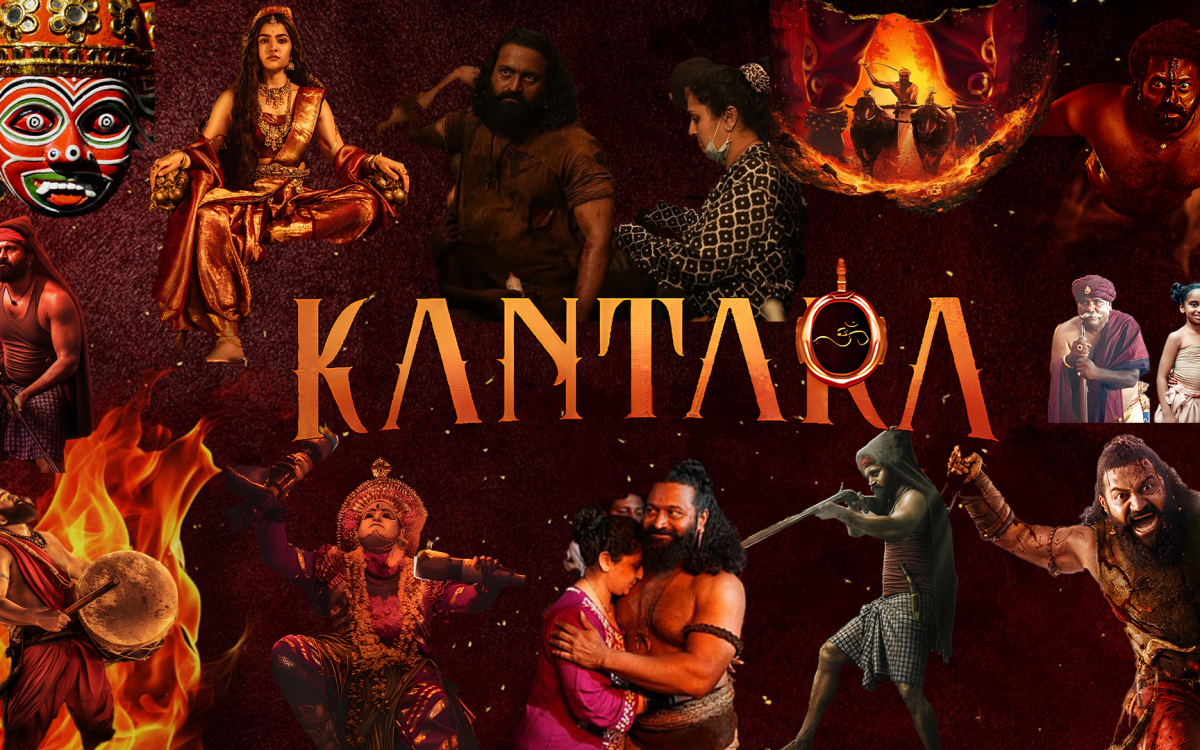
Among films that straddle the worlds of romance and thriller, packed with high-voltage commercial appeal, KANATARA stands as a titan of Indian cinema. Its strength lies not only in its thrilling narrative but also in its deep roots in mythology and folklore, drawing audiences to theatres through sheer fascination and affection for cultural heritage. While the film’s thematic depth deserves recognition, the extraordinary contribution of its costume designer cannot go unnoticed. As KANATARA scaled critical acclaim and box office success, the meticulous artistry behind its costume design—led by K N Manikandan—emerges as a cornerstone of the film’s visual storytelling.
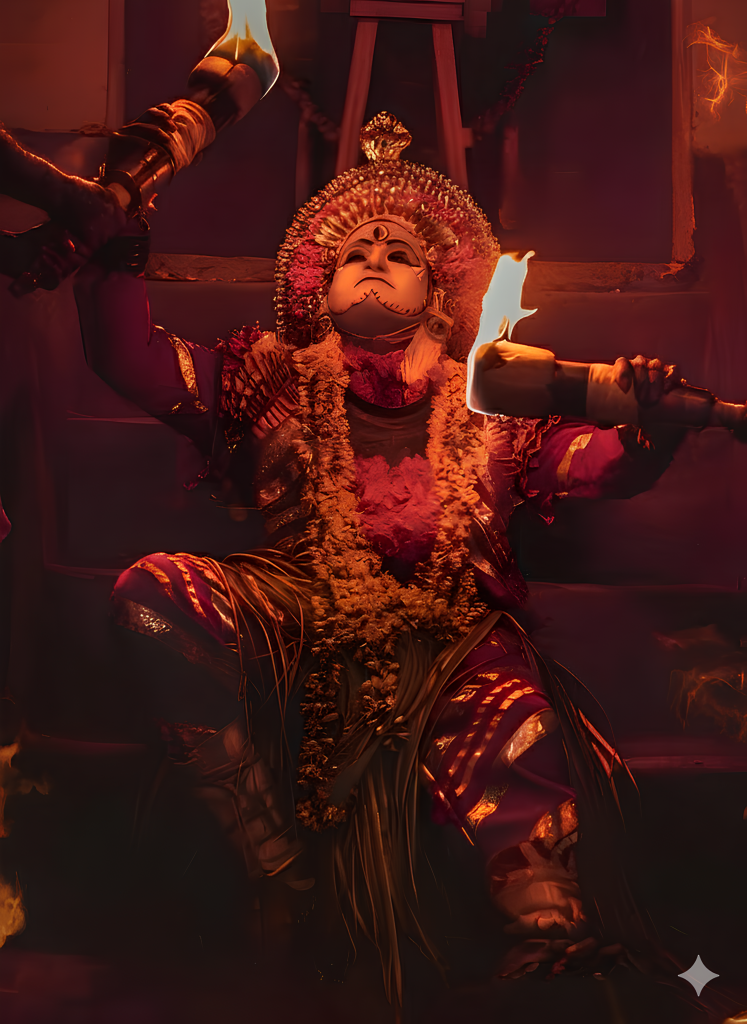
Cinema is a symphony of visuals, performance, and design — yet often, costume quietly carries the soul of a story. In Kantara, this truth comes alive. From tribal rituals to royal courts, every fabric, hue, and ornament speaks of culture, emotion, and mythology.
In an industry often dominated by the tried-and-tested formulas of romance and thrillers, Kantara emerges as a cinematic force — a titan that transcends genres and expectations. Rooted in the mysticism of folklore and mythology, the film weaves an immersive narrative that celebrates the spirit of South Indian culture. Its magnetic pull lies not just in storytelling or spectacle, but in the deep compassion and fascination it evokes for a living tradition
While much has been said about Kantara’s thematic depth and box-office triumph, one vital aspect deserves the spotlight — its inspired costume design. Beyond the surface of aesthetic beauty, the costumes serve as vessels of identity, belief, and emotion -an exploration of how cloth becomes character, and how design can capture the invisible threads that bind culture, belief, and emotion together.
Moving forward, we will explore how Pragathi Shetty’s vision — in conversation with other crafts of the film — shaped Kantara’s distinctive world, and how costume design became a vital language in realizing the film’s spiritual and emotional impact.
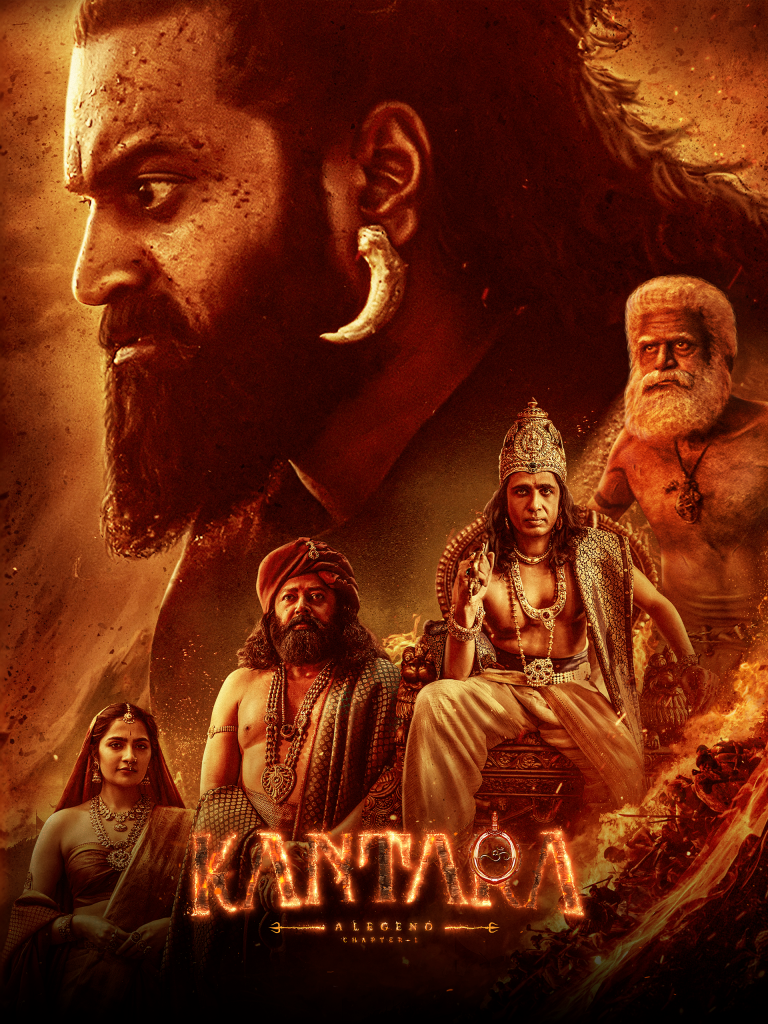
Prologue: Crafting a Universe, Thread by Thread
“The moment Rishab narrated the script to me, I began my research… and at that time, my daughter was still in the womb,” recalls Smt. Pragathi Shetty, the visionary costume designer behind KANATARA. From being a partner to Rishab Shetty, the creator of the Kantara universe, to translating fashion insights into cinematic costume design, her journey is nothing short of inspiring.
With a modest team of just three people for the first film, Pragathi’s perseverance and ingenuity became the backbone of the costumes. For the sequel, the team expanded eightfold, thanks to a larger budget—an opportunity that brought much-needed relief to her and her crew. With this expanded canvas, the costume design could grow as bold and detailed as the epic story itself.
Moving forward, we explore how the costumes—often unsung heroes of cinematic craft—intertwine with narrative, setting, and character, enhancing the film’s overall impact.
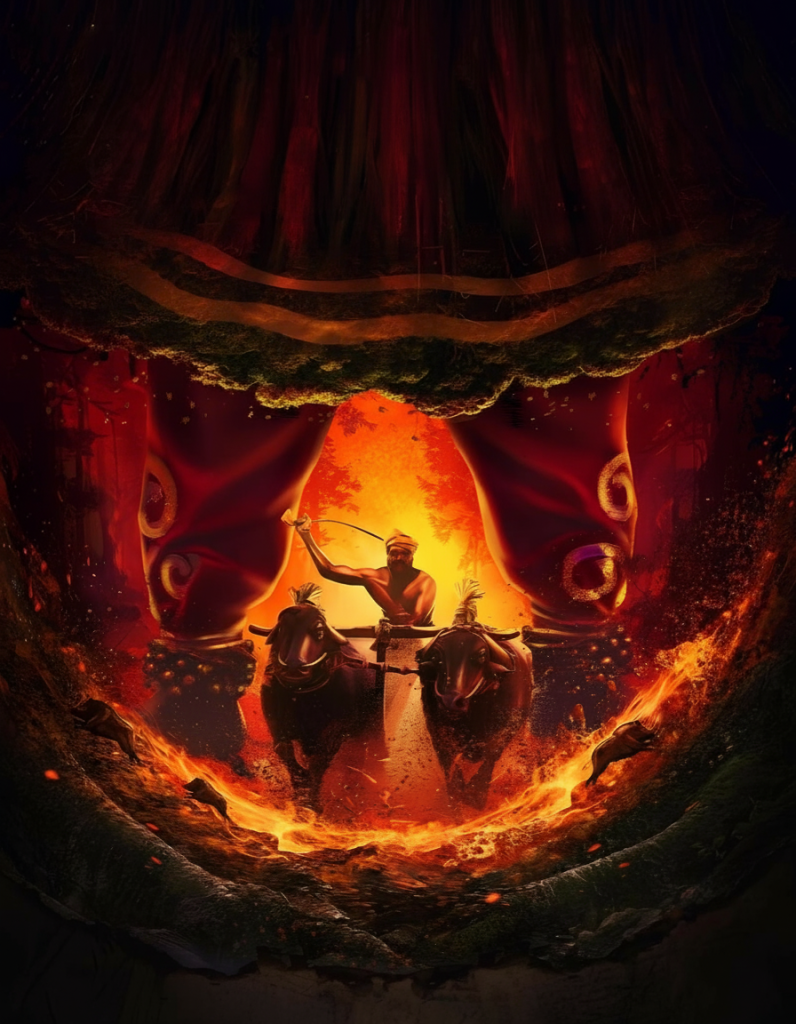
The Costume Design: A Metonym for the Art of Film
Set in the 4th century during the pre-colonial Kadamba dynasty, KANATARA is a visual spectacle where every costume tells a story. Scenes often featured hundreds, sometimes thousands, of junior artists. Coordinating costumes for each, ensuring proper fit, continuity, and authenticity—especially during massive war sequences—was a monumental task.
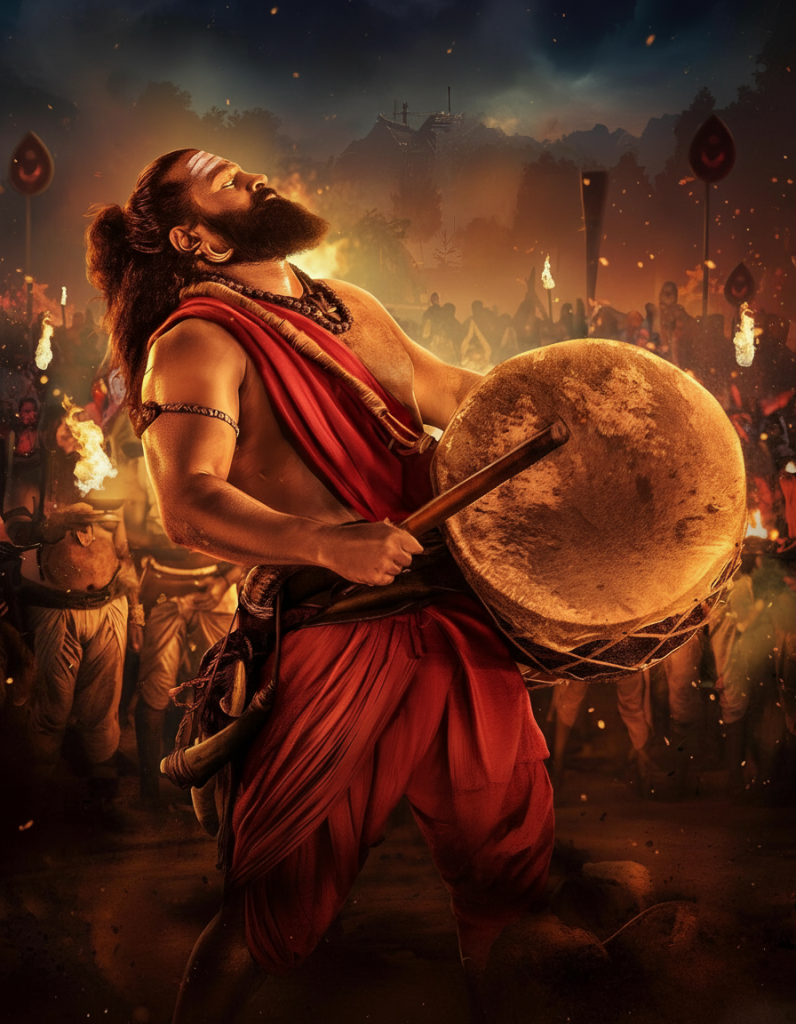
Pragathi Shetty spent months researching, sketching, and prototyping each outfit with meticulous precision. Her methodology—what she calls “ethnographic research”—required immersing herself in communities, living among them to absorb the nuances of their culture, language, attire, and lifestyle. The result is a level of authenticity and soulfulness in the costumes that transcends mere clothing; they become an integral part of the storytelling.
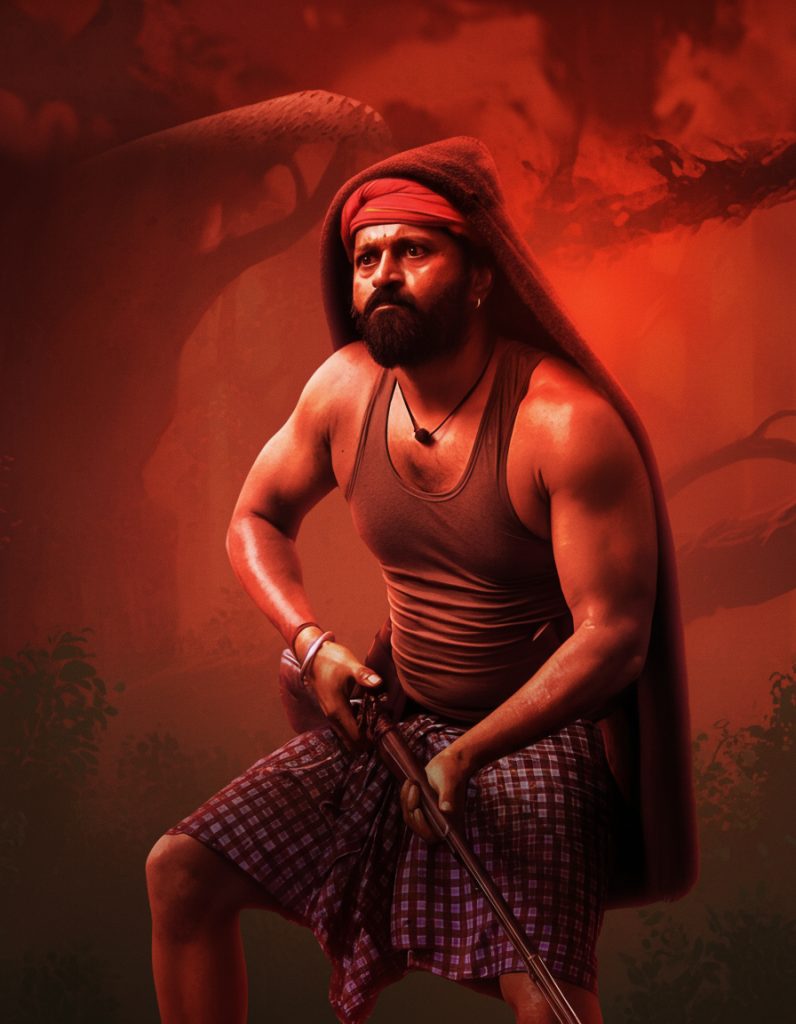
As one reflects on her work, it’s clear that KANATARA’s costumes are more than fabric and thread—they are a metonym for the art of film itself. Through Pragathi Shetty’s vision, dedication, and artistry, the costumes breathe life into characters, anchor cultural authenticity, and elevate the cinematic experience to unforgettable heights.
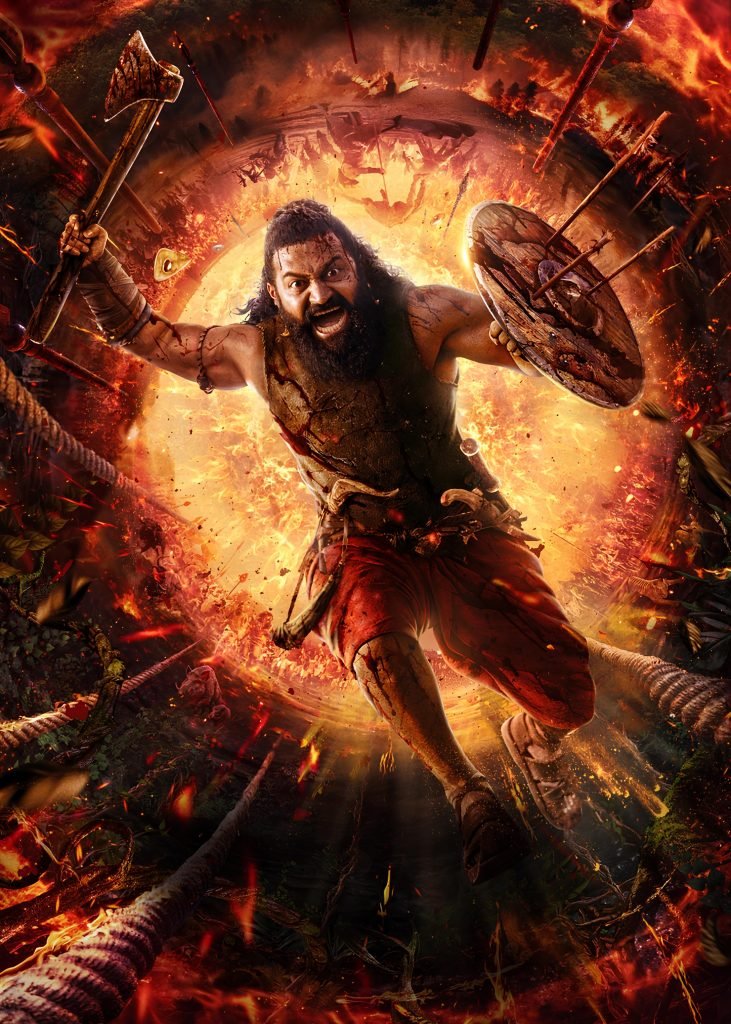
Costumes & Properties – Crafting the Colour Palette of Kantara
In KANTARA, costume design is not just about clothing—it’s a visual language that speaks directly to mood, character, and narrative. Costume designers, led by Pragathi Shetty, work hand-in-hand with the cinematographer and director, forming a close-knit triad that shapes the film’s visual identity. This collaboration acts as the binding force in creating the film’s “mood board,” aligning costumes, makeup, and cinematography into a seamless aesthetic. Let’s break down the costume design and colour palette across three distinct narrative segments:
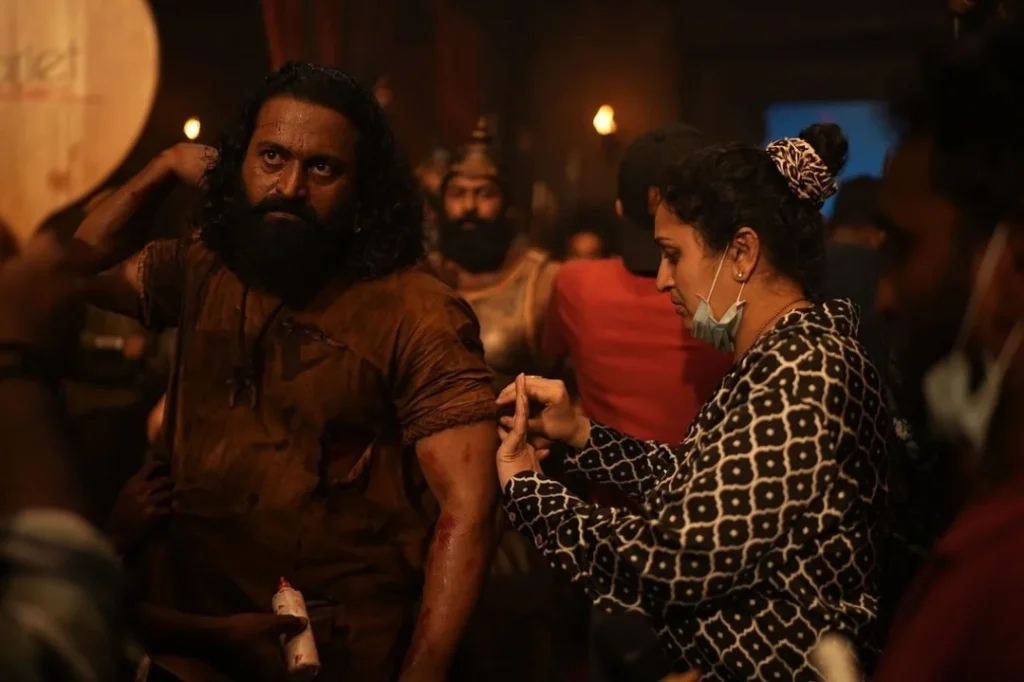
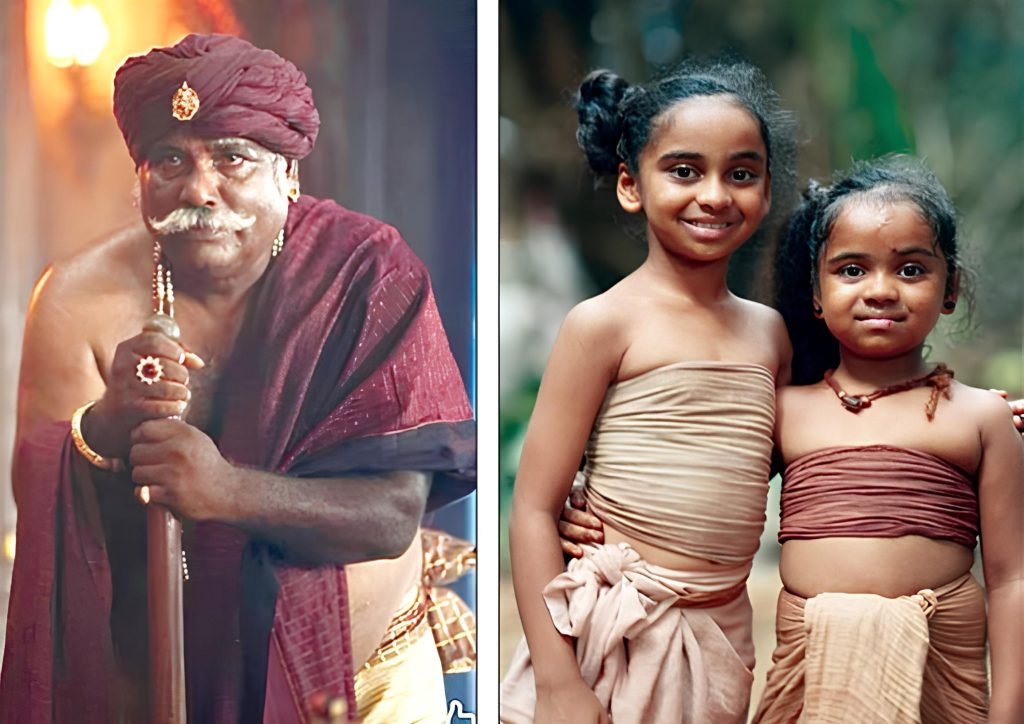
The Tribal Segment
Set thousands of years in the past among a tribal demographic, this segment required intense research to ensure authenticity. Deep brick-red and rust-red drapes dominate the costume palette, signaling ritual readiness, urgency, and a departure from everyday life. For Rishab’s character, the tones lean darker—charcoal blacks, deep browns in leather straps—evoking the rugged terrain and harsh lifestyle. Every hue and fabric choice was meticulously curated to heighten the emotional resonance and realism of the tribal world.
The Princess and the Palace Segment
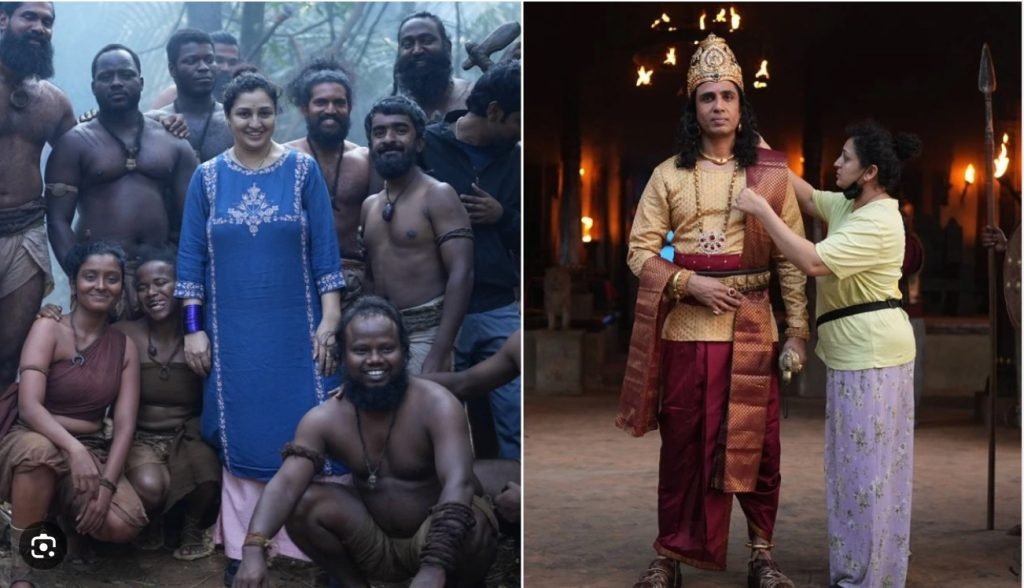
“I sourced every jewel and accessory for the royal characters myself; nothing was readymade,” Pragathi Shetty recalls, highlighting the painstaking craftsmanship behind the regal costumes. Princess Rukmini Vasanth’s blouse in jade-green, paired with a rich red and maroon Pallu drape, exemplifies opulence while staying true to cultural standards. The silk fabric, with its subtle sheen, contrasts beautifully against the coarse cottons of everyday tribal life, instantly signaling luxury, power, and sophistication.
The Ritual Segment
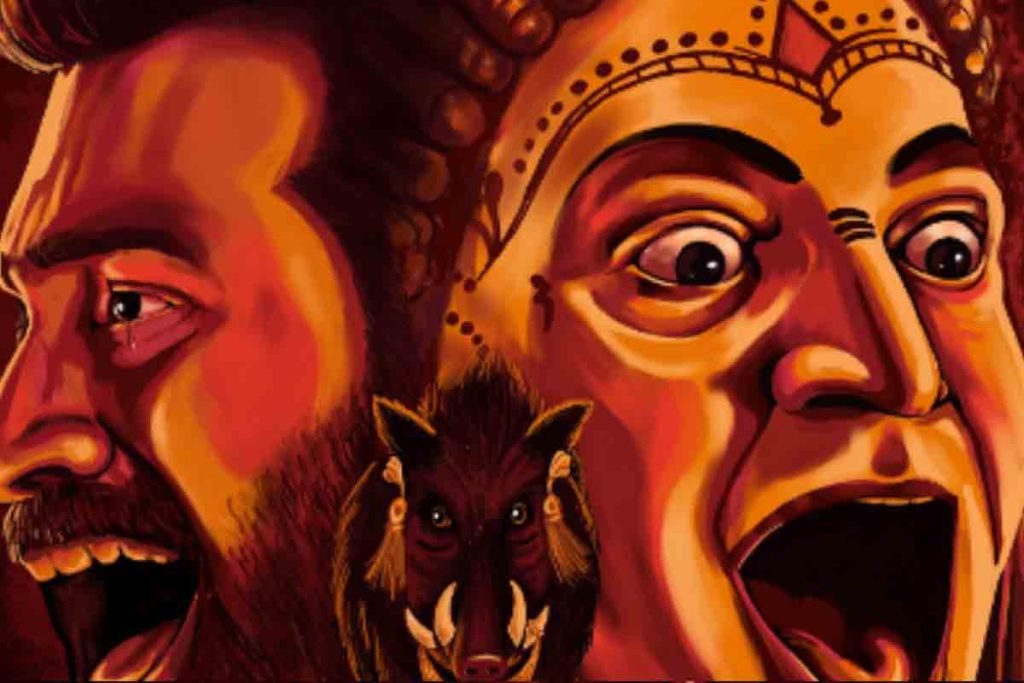
At the heart of KANTARA is the folklore of Bhuta-Kola, the ritualistic spirit dance that drives the narrative. Here, the costume design leans into vibrant, warm tones for characters, set against cooler background lighting—a deliberate choice that makes the performers pop on screen. The headgear is dramatic, adorned with feathers, metal spikes, and bold gold and bronze hues. Complemented by crimson reds, ivory face paint, layered metal chains, heavy ear gear, leather straps, and large cuffs, the costumes evoke awe, reverence, and a sense of sacred spectacle.
Epilogue: More Than Costume—A Cultural Manifesto
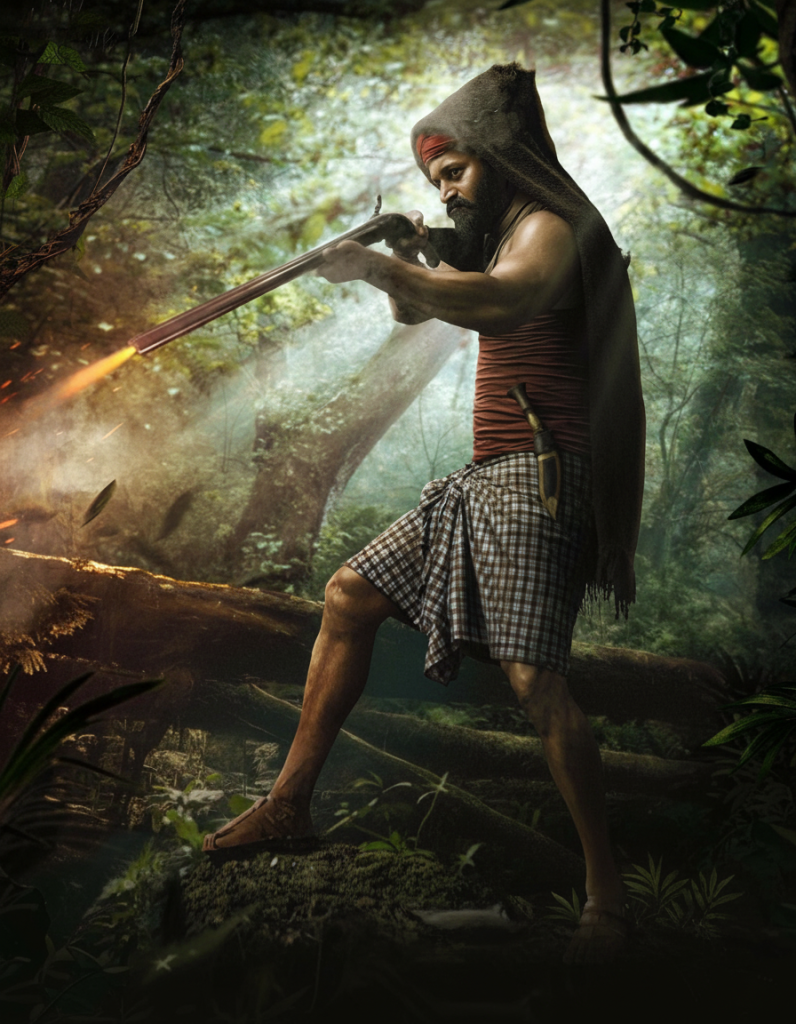
“Fans should not imitate the ‘Daiva’ because of the sacred tradition and physical demands of the costume,” Rishab Shetty reminds us—a gesture that underscores the film’s deep respect for culture. KANTARA transcends cinema; it is a manifesto to preserve sacred roots before they are lost to time. Every nuance, from costumes to cinematography, is meticulously curated to honor this vision. While all 24 crafts behind the film contribute profoundly, costume design deserves a special mention for breathing life into the story’s world.
The Shetty duo emerges as a paradigm for today’s young filmmakers: a testament that genuine love and collaboration pave the way to extraordinary achievement.Kantara is more than a film; it is a celebration of culture, craft, and conviction. Among all its elements, costume design stands out — a silent storyteller weaving history, ritual, and emotion into every frame. The Shettys remind us that when vision and dedication meet, art becomes timeless.