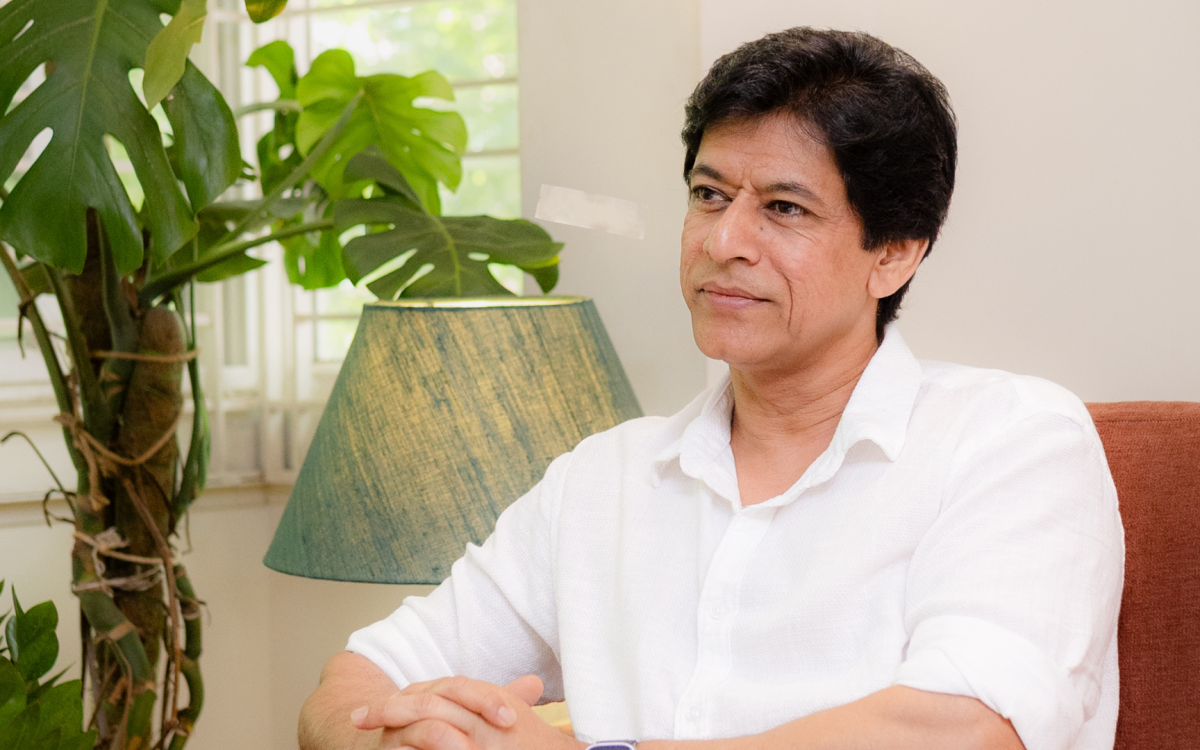
Capturing Style Through the Lens of the ace photographer
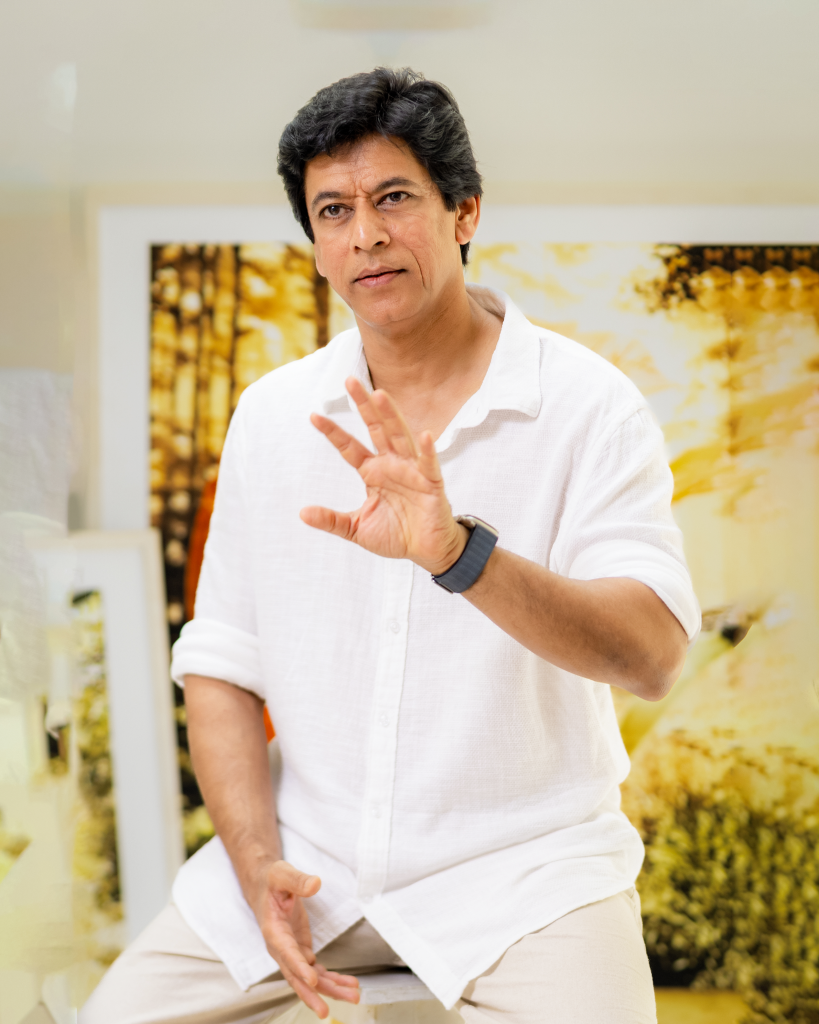
Renowned for his striking compositions and timeless storytelling, G. Venkatram has spent decades behind the camera shaping the visual language of Indian fashion. From iconic advertisements, magazine covers to evocative runway captures, his lens has not only documented trends but defined them. In this exclusive conversation, the celebrated photographer recalls his journey, the evolving face of fashion, and the powerful stories hidden within every frame.
Can you take us back to the moment you realized photography was more than just a hobby—when it became your calling?”
“Photography started off as a simple hobby back in my school days. I’d play around with my father’s old Minolta viewfinder camera, capturing family moments—birthdays, weddings, that sort of thing. Of course, this was the film era, so things moved at a different pace. You’d shoot a roll, and it would often take six months to finish before it was sent off for processing. By the time the prints came back, you’d almost forgotten what you’d photographed. There was something beautifully uncertain about that process—it made the whole experience more magical.
At that point, I wasn’t thinking of photography as anything more than a pastime. My father was the one who introduced me to the technical side—shutter speeds, apertures, and how to balance the two for the right exposure. That early learning planted a seed, but a career in photography was still far from my mind. It was curiosity more than ambition that kept me going back then. It really began to take shape when I was studying engineering. The campus was incredibly scenic—lush, full of character—and something about the environment made me more visually aware. I found myself drawn to the way light fell on buildings, the texture of everyday moments. That’s when the spark reignited. Those early memories of shooting on film as a kid came rushing back, and I thought to myself, why not photography? That’s where the journey truly began.”
2.”Your face lit up as you recalled the analogue days. In this fast-paced digital era, do you find yourself missing that time?”
“Absolutely, I do miss it. There was something incredibly precious and unpredictable about shooting on film. That uncertainty—the not knowing exactly what you captured until much later—was part of the magic. It made every frame feel like a surprise, sometimes a miracle. Of course, looking back now, I do love what digital has brought us. It’s efficient, forgiving, and far less nerve-wracking. Back then, my heart would be in my mouth until the negatives were processed—especially when it was a client shoot. If something went wrong, there was no turning back. It could make or break your reputation. Traveling with film was an adventure in itself. At airports, we’d have to send rolls of film through X-ray machines. Even though they were labeled ‘film safe,’ you could never be entirely sure. There was always a quiet fear that something might go wrong. That element of risk—the thrill of the unknown—is something I genuinely miss. It added a certain edge to the craft.”
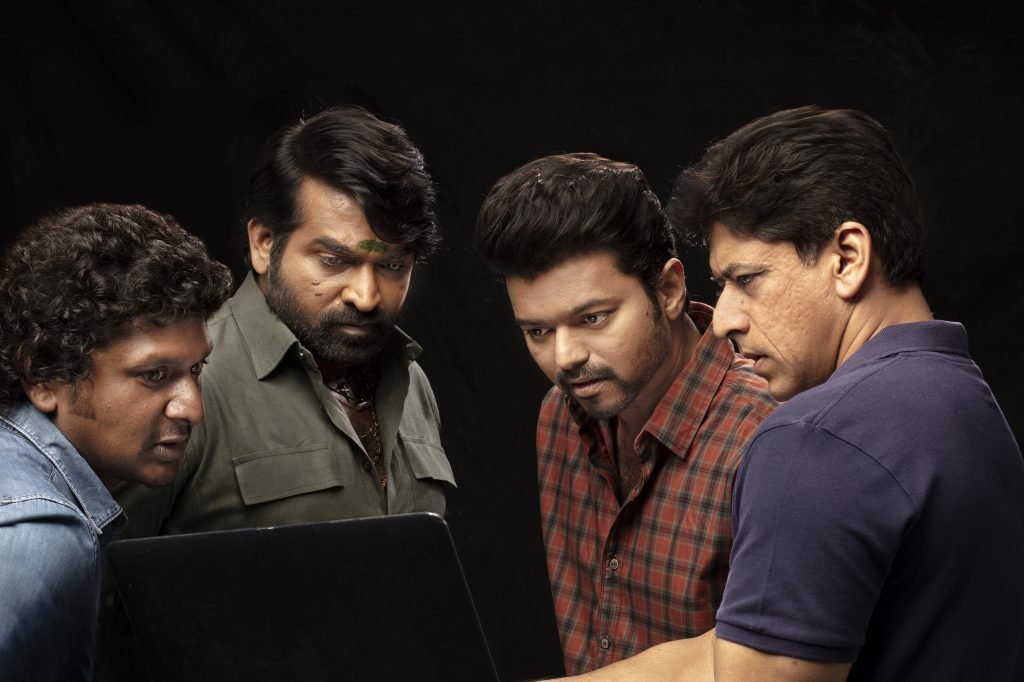
“Could you walk us through your journey as a photographer?”
“My career began with product photography—something many people don’t immediately associate with glamour, but it was an incredible training ground. Back then, advertising wasn’t just about faces; it was about the product. I shot everything from credit cards and computer components to closet doors and tyres—pretty much anything you can think of. The challenge was to make even the most ordinary object look extraordinary.
That was the essence of advertising photography in those days: finding beauty in the mundane. My job was to elevate the product, to give it visual appeal and character, no matter how utilitarian it seemed. But as the industry evolved, so did its focus. By the ’90s, there was a clear shift—emotions began to take center stage. Whether it was a print ad or a television commercial, the emotional connection with the audience became everything. The lens gradually moved from product to people. By the early 2000s, products took a backseat, and storytelling through faces, expressions, and mood became the heart of commercial photography. That transition was a turning point—it pulled me closer to portraiture and the world of fashion and editorial.”
“When you look back at your body of work, what goes through your mind?”
“I’m not a particularly emotional person—I tend to take things as they come. Of course, it’s always nice to look back. I hear young photographers today romanticizing the analogue days, talking about how special it is to handle negatives. And yes, there was a charm to that era. I enjoyed shooting on film just as much as I enjoy working in the digital space now—and even with the rise of AI, I find it exciting to see where the craft is headed. But personally, I’ve always been someone who prefers to look forward. While I do occasionally pause to revisit old work or appreciate a particular moment in my journey, I don’t dwell in the past. For me, constantly leaning on past achievements can become a trap—it limits what you’re open to next. I believe in staying focused on the future, on what’s yet to come. That’s where my energy is.” “With digitalization, technological advances, and now AI entering the scene—how do you see these shifts affecting your work and the photography industry as a whole?”
“The shift actually began over 25 years ago, when analogue gave way to digital. That was the first major disruption. I still remember when Kodak introduced a 1-megapixel camera around 1999—it cost nearly two lakhs, and yet everyone was curious. Compare that to today, where your smartphone comes with 25 or 35 megapixels. That’s how dramatically things have changed. Back then, painted hoardings vanished almost overnight, replaced by digital billboards. The transition happened fast—but the speed at which change is happening now is even more staggering. By the time you’ve understood one new development, several more have already taken over.
Even as a photographer, I find myself questioning—where do I fit in with all this technology? Today, photography is so tech-driven that at times, it feels like you’re operating a machine rather than crafting an image. Earlier, we worked with just the basics: shutter speed, aperture, a simple lens—and from that, we created. Focusing, especially with medium or large format cameras, required skill and precision. Now, cameras come with AI-driven autofocus systems that can track a bird’s eye mid-flight, and they won’t lose focus even if someone walks through the frame. It’s mind-blowing. So, where does that leave the photographer? I believe the real challenge now is to ensure that your creativity and individuality remain at the forefront. You may not be able to counter AI, but you can carve out a space for yourself. That’s what will define your relevance in the future. It’s about evolving with intent—constantly asking yourself: What’s my next step? If you can do that, there’s always a place for you in this ever-changing field.”
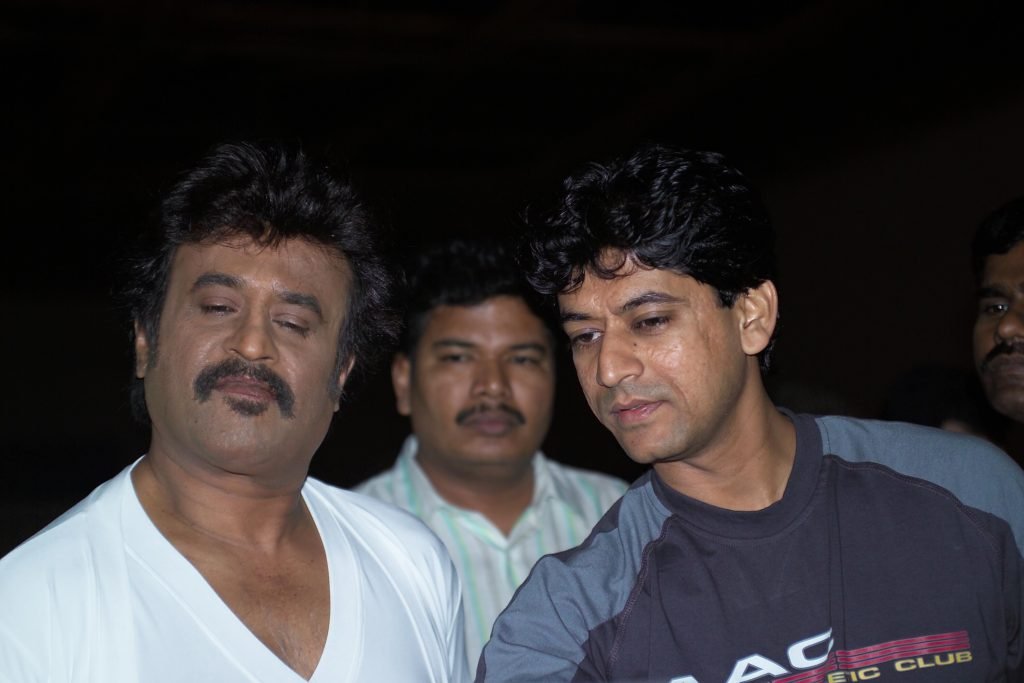
Today everyone who has a phone is a photographer. How do you perceive that?
“Actually, I am very happy. At one point in time when I started off in Chennai there were only ten professional photographers who were doing advertising work. Can you imagine that! Today there may be a ten thousand or more. So, what I am happy about is that at one point in time photography was considered unique and specific to a certain kind of people. But today everybody is a photographer. The fact that everybody is a visual artist make me happy. How many can fix an electrical issue at home. You call an electrician, there’s a simple block in your water pipe, you call a plumber. But do you call a photographer to capture a moment your kid at home will shoot your picture, whether it is a picture or even copying a document a child at home will do it for you. What’s nice is that everyone is a visual artist and its not that they just shoot, they look, they compose and then they shoot. Therefore there’s some sense of artistry that is blossoming in them is what I see and relish.”
What was your first major break in fashion photography, and how did it come about after your earlier work in other genres?
My foray into fashion photography began when we started working with several film stars and collaborating with Chennai-based designers for various brand campaigns. That’s really when fashion entered the frame for me. We were fortunate to work with some of the top models in the industry at the time, and gradually, the transition happened. It wasn’t an overnight switch—it was a slow, organic evolution from product photography to fashion. Unlike Mumbai, Chennai didn’t have a very prominent fashion scene back then, so it came with its own set of challenges. But in many ways, that made the journey all the more engaging. The shift felt natural, and fashion photography soon became not just part of my work—but something I’ve continued to pursue passionately ever since.
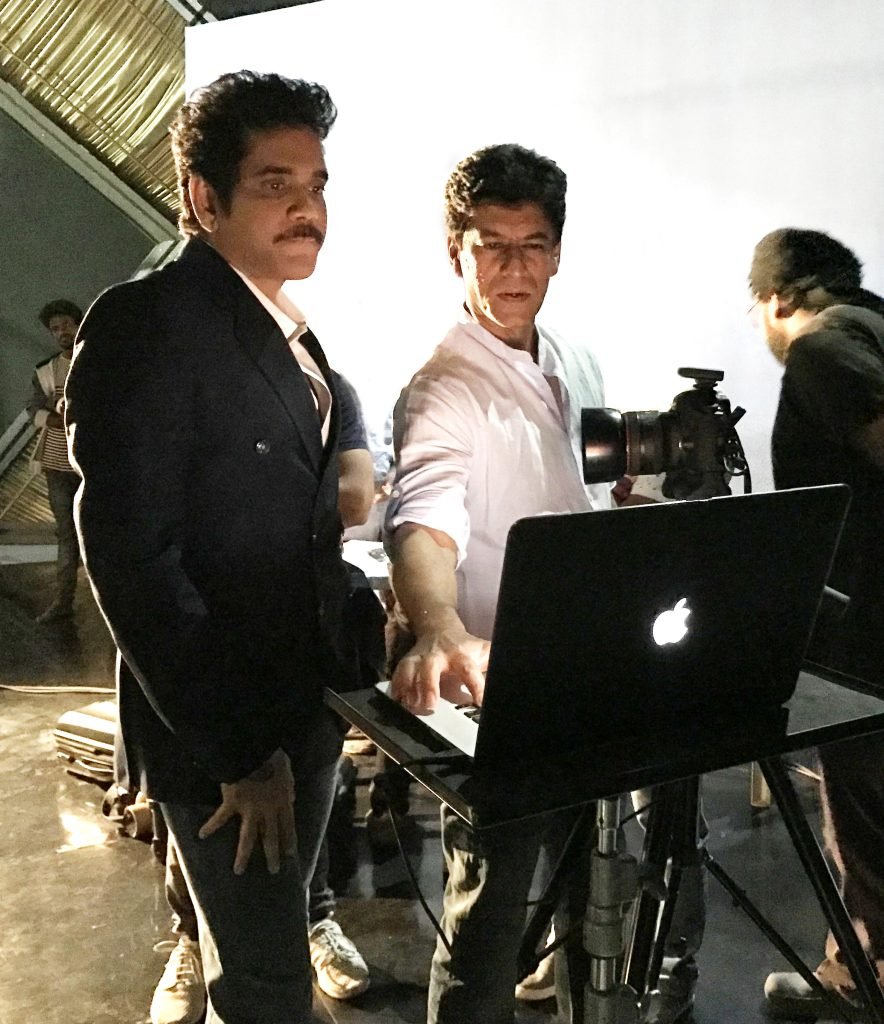
Fashion is constantly evolving. How has your perception of fashion changed over the years—through your lens?
My perception of fashion hasn’t changed as much as my approach to it has. I’ve always believed that fashion is in a state of perpetual motion—it shifts moment to moment. You can’t simply acquire knowledge and hold onto it, expecting it to stay relevant. What’s trending today might feel outdated tomorrow, sometimes even before you get the chance to try it.
Earlier, trends had a shelf life—they lasted for a year, maybe more. Now, the pace is relentless. As a photographer, that makes fashion both fascinating and incredibly challenging. I constantly need to anticipate change—not just in styling or garments, but in how we light, compose, and tell a visual story. A lighting setup that feels perfect today might look dated in just a few months. To stay ahead, I continuously learn—from makeup artists, hairstylists, designers… it’s always a team effort. Fashion photography, to me, is about staying agile, observant, and open to evolution. That’s what keeps it exciting.
What goes through your mind as you prepare for a shoot? And in a world dominated by selfies, what advice would you offer the younger generation?
When I’m preparing for a shoot—especially portfolios—I often find that people come in with reference images and say, “I want to look like this.” And that’s perfectly understandable. References are helpful. But what I always keep in mind as a photographer is this: not everything that looks good on someone else will work for you.
It’s my job to understand what suits the subject—their features, their personality, their presence. That’s where aesthetics come in. I need to be able to guide them, gently but confidently, and say, “This works for you; this might not.” It’s about creating something authentic and unique, while still making the subject feel seen and beautiful. To the younger generation, especially in this age of selfies and filters, I’d say: it’s great to experiment and be inspired, but don’t lose sight of who you are. Use references but choose the ones that reflect you. Authenticity always stands out. The best photograph isn’t the one where you look like someone else—it’s the one where you look like the best version of yourself.
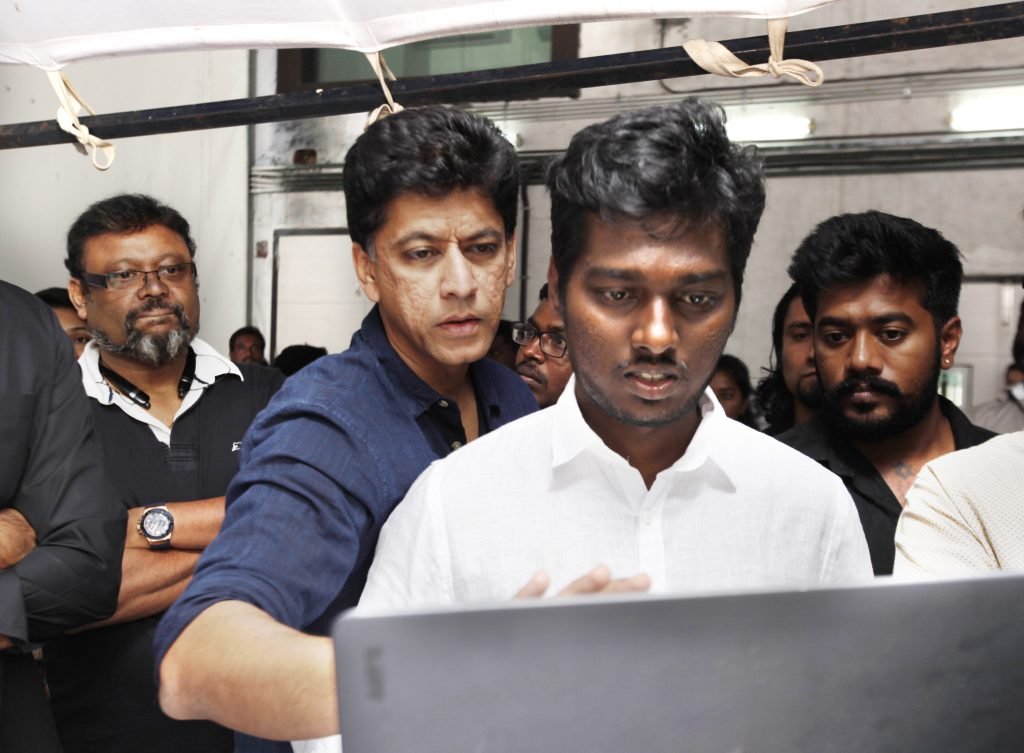
Could you share with us a memory from all your shooting experience?
There are quite a few! And of course, there have been some challenging moments as well. I remember doing a calendar shoot for Kodak back in 2000. We were shooting in a place called Yelagiri in Tamil Nadu, right in the middle of the wild. What happened there was quite funny in hindsight.
We had picked out a tree for one of the shots and wanted the model to climb it—it was about 20 feet high. We used ladders to help her get up there. Once she was in place, I had to move to another hill, almost half a kilometer away, to capture a long shot. What we didn’t know at the time was that the tree was full of ants. There were no mobile phones then, so I couldn’t communicate with the team directly. But I could see from a distance that the model seemed uncomfortable and kept fidgeting. I had to stop the shoot. Later, we discovered she had been badly bitten by ants. Moments like these stay with you. Over the years, I’ve had many such experiences—some funny, some unexpected—and they continue to happen even now.
What’s the biggest challenge you face in a shoot?
“Every shoot comes with its own set of challenges,” says ace photographer G. Venketram. “No matter how much you plan, the moment you arrive on location, reality rarely aligns with your vision. It’s easy to feel disheartened when things don’t unfold as imagined—but that’s where the true test lies.” He adds, “In all my years, I’ve realised that what I plan almost never goes exactly as envisioned. But I’ve come to embrace that unpredictability. The real creative magic happens when you’re forced to adapt, to think on your feet, and make the most of what you have. In fact, I look forward to those moments—it’s when your instincts take over, and that’s when the magic truly begins.”
What role does storytelling play in your fashion photography? Do you approach shoots like a narrative?
“Absolutely—especially when it comes to concept-driven shoots,” says G. Venketram. “In today’s social media age, it’s easy to post a striking image and move on. But a photograph that carries a story or emotional thread resonates far more deeply. That’s where storytelling becomes essential.”
He continues, “Some say finding stories is difficult, but I believe every day offers one. Every moment holds something unique—we’re just often too distracted by our gadgets to notice. I make it a point to look around, to observe. That’s what makes me a visual person.” “For a photographer, inspiration is everything—and observation is the key to it. It shapes how you create, adds depth to your direction, and makes the final output far more authentic. When you’ve truly observed, you capture not just a pose, but the nuances—body language, expression, emotion. That’s what brings a story to life in a single frame.”
Talking of concepts, you recently recreated something truly special. Could you tell us more about that experience?
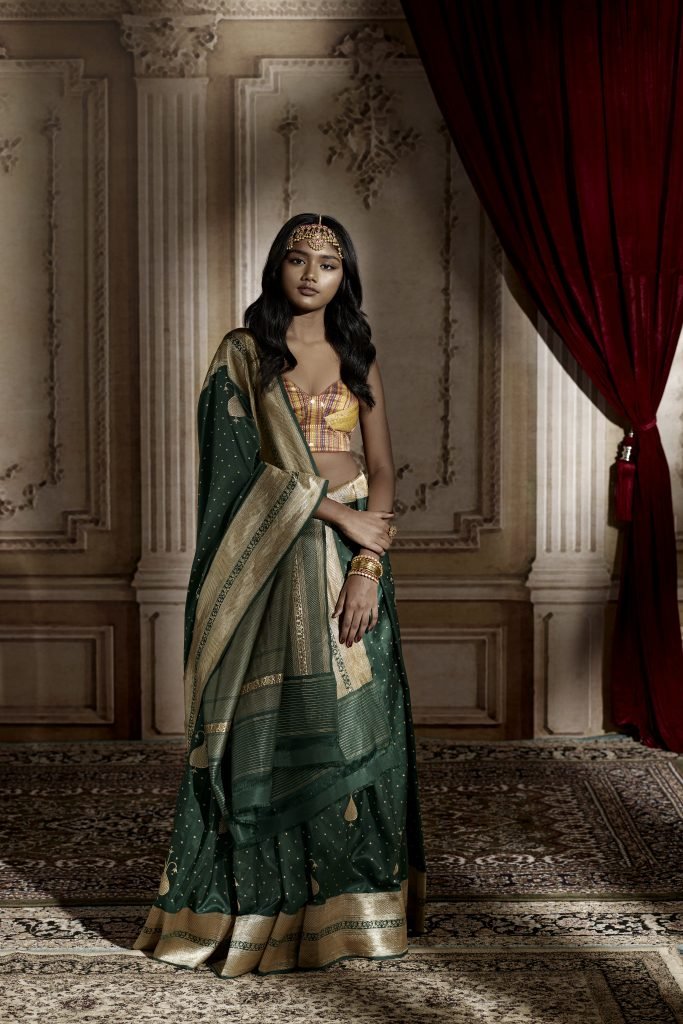
“There’s an old vintage photograph of my great-grandparents that I saw as a child, and it left a lasting impression on me,” recalls G. Venketram. “But when I revisited it years later—as a photographer—I saw it with a completely new lens. I started noticing the intricate details: what my great-grandmother was wearing, the jewellery, the context behind their attire… so many layers and questions began to unfold.” That image, taken in 1905, revealed that his great-grandmother was just 13 years old at the time. “All of this piqued my curiosity and I thought—why not try to recreate this moment?” he says. What followed was an unexpectedly enriching journey. “Around that time, I received a message on Instagram from a young girl who introduced herself as Miss Tamil Nadu Junior. She wrote, ‘I’m in 8th standard, and if you like me, please let me know if I can model for you.’ I remembered her when I began planning the shoot—and she fit the role beautifully.” Venketram reached out to brands, and soon, Amrapali and Mango came on board, helping him source jewellery that closely matched the original image. “The shoot turned out to be incredibly fulfilling—not just artistically, but emotionally. I even discovered that the original photo had been shot on a glass negative, which added another layer of historical significance.” Reflecting on the project, he says, “It was a huge learning experience. It deepened my appreciation for vintage photography and the stories they silently tell. I hope to take this inspiration forward and do more such recreations that connect the past to the present.”
You also recreated Raja Ravi Varma’s iconic paintings—a project that generated a lot of buzz. How did that idea come about?
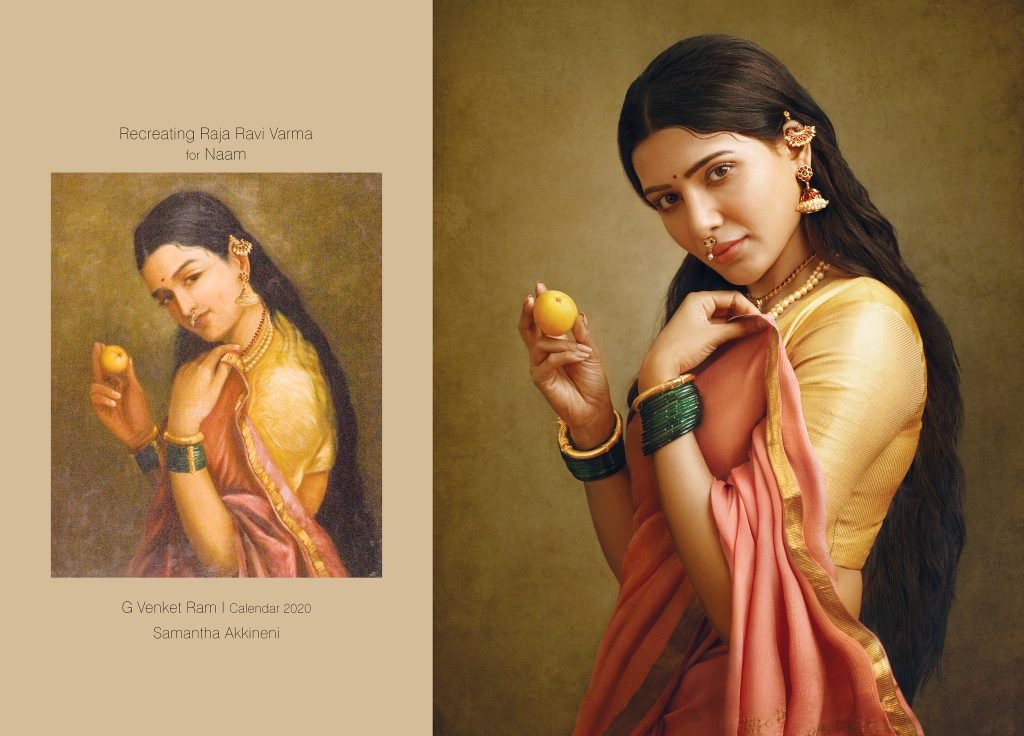
“It actually began quite organically,” says G. Venketram. “During the Chennai floods, actor Suhasini Maniratnam organised a fashion fundraiser through her NGO, Naam. She suggested we shoot something to support the initiative, and we ended up doing a single image with actress Khushbu, inspired by Ravi Varma’s work.” That lone photograph stayed tucked away—until five years later, when Venketram casually shared it on social media. “To my surprise, it got a great response. That reaction planted a seed. One November morning, I called Suhasini and said, ‘Why don’t we complete this as a calendar?’ We met, brainstormed, did our homework, and just got started.” The first full shoot featured actress Nadhiya, who happened to be in town. “We began working in a chain—shooting one actor, then sharing the result with the next to help them understand the vision. That step-by-step process-built momentum.” Each shoot brought its own challenges, especially the final one with danseuse-actress Shobana. “We had to recreate a very specific painting, which meant finding both a baby and a dog—true to the original. But we did it, and that shot completed the series.” The project quietly launched and, for a while, faded from public attention. “Then, out of nowhere, actress Samantha shared one of the images online—and suddenly, it was everywhere.” But for Venketram, the biggest lesson wasn’t about virality. “People often create with the intention of going viral. That’s the wrong approach. You should create because it means something to you—because you’re passionate about it and the process brings you joy. Whether it trends or not is secondary.” He recalls a particularly heartwarming moment. “My sister, who lives abroad, was chatting with me on WhatsApp. I noticed her display picture—it was a collage of the Ravi Varma recreations. I asked her about it, and she said, ‘I don’t know who shot it, but people kept sharing it, so I put it up too.’ That really struck me.” He smiles, “I told her, ‘You know I took those photos, right?’ That’s when it hit me—people connected with it because it was culturally resonant. Not because it was designed to go viral, but because it felt authentic. That’s the kind of work that lives on.”
Many aspiring photographers look up to you. What advice would you give to those hoping to break into the field today?
“There’s no single formula,” says G. Venketram. “But the most important thing is to enjoy what you do. The industry is evolving so fast—what’s relevant today might disappear tomorrow. So, passion is what keeps you grounded.” He continues, “Always stay open to learning, from everyone—whether it’s your mentor, your team, or even a complete beginner. Pay attention not just to the technical side, but also to the way things are done how people plan, how they react when things don’t go as expected, how they find solutions. That’s where the real growth happens.” “It’s that ability to observe and absorb—not just shoot—that will carry you forward and keep your work evolving.”
If your camera could talk, what would it say to you?
(Laughs!) That’s a tough question…. Leave me alone. What’s the biggest myth that people have about photography? They think its magic. It is though I wouldn’t call it. I create and there is a lot of hard work that goes into, What’s that one thing your muse or subject can do to instantly elevate a picture? It totally depends on the project, the person on the situation around so its very subjective, therefore there cannot be a specific answer.