

In Part One, we explored the essentials of skincare and prepping your canvas for makeup. Now, in Part Two, we’re diving deeper into foundation—how to prep different skin types, tackle specific concerns like acne or redness, and ensure your makeup lasts all day, no matter the weather. Whether your skin is oily, dry, or combination, these expert tips will help you achieve a flawless, smooth, and long-lasting finish every time. By M Chanshimla Addressing Skin Types and Concerns How do you prepare different skin types (oily, dry, combination) before applying makeup, particularly foundation? Prep is 80% of the game, I swear! * Oily Skin: It is all about oil control and mattifying! I usually start with a gentle cleanser, followed by a toner (sometimes a mattifying one). A lightweight, oil-free moisturizer is crucial, even for oily skin, to prevent it from overcompensating and producing more oil. Then, focus is on the T-zone, a mattifying or pore-filling primer is a must in that zone.* Dry Skin: Hydration, hydration, hydration! I cleanse gently, then use a hydrating toner or essence. A rich, nourishing moisturizer is essential, and sometimes even a facial oil or a hydrating serum underneath. A hydrating or illuminating primer will plump up the skin and create a smooth canvas without emphasizing dry patches.* Combination Skin: This is a mix and match! I often use a hydrating moisturizer on the drier areas (cheeks) and a lighter, potentially oil-controlling one on the oilier areas (T-zone). Then, I might spot-prime with a mattifying primer where needed and a hydrating primer elsewhere. It is about targeting specific needs. What steps do you take to ensure foundation does not settle into fine lines or pores? This is a common struggle, but totally fixable!* Less is more: Seriously, apply thin layers. Too much product will just gather in those areas.* Primer Power: Use a pore-filling or blurring primer specifically on areas with large pores or fine lines. These primers create a smoother surface for the foundation to sit on.* Press, do not rub: When applying foundation, especially around the eyes or mouth, gently press or tap the product in with a damp sponge or finger. Rubbing can push product into lines.* Set lightly: A very light dusting of translucent setting powder, especially in the T-zone and under the eyes, can lock everything in place without adding bulk. I would suggest to a fluffy brush and go light with the hand.* Hydration: For fine lines, ensuring the skin is well-hydrated beforehand can make a huge difference in how the foundation sits. How do you handle clients with specific skin concerns like acne or redness when using foundation? – Sensitive topic, so always with a gentle touch and understanding!* Acne:* Gentle Prep: Avoid anything that could irritate active breakouts. Use gentle, non-comedogenic products.* Colour Correcting: Green corrector for redness around active breakouts.* Spot Concealing: Instead of piling on foundation, I would usually apply a medium-to-full coverage foundation first and then move on with a high-coverage concealer on the individual spots. Dab the concealer on, let it sit for a minute to get tacky, then gently tap the edges to blend.* Sanitation: Always use clean brushes/sponges and avoid double-dipping directly onto the skin.* Redness (like rosacea or general flushing):* Soothing Prep: Use calming, anti-inflammatory skincare products before foundation.* Green Corrector: This is your best friend! Apply a sheer layer over areas of redness before foundation.* Build Coverage: Use a foundation with good coverage (medium to full) and build it up gradually over the red areas.* Avoid Irritation: Be gentle during application; no harsh rubbing.The key for both is to neutralize the discoloration and create an even canvas without looking heavy or cakey. What techniques do you use to ensure makeup, including foundation, lasts throughout the day? * Primer Power-Up: Choosing the right primer for the skin type and desired finish is crucial. A good primer creates a barrier and helps makeup grip the skin.* Layering: Apply foundation in thin, buildable layers rather than one thick coat.* Setting Powder: A light dusting of translucent setting powder (or a powder specifically for your skin type) is a game-changer. Focus on the T-zone and any areas prone to oiliness or creasing. “Baking” is an option for extreme longevity but use sparingly.* Setting Spray: A good setting spray is like hairspray for your face! It melts all the powders and creams together and creates a film that locks everything in place. There are matte, dewy, and natural finish setting sprays, so pick one that matches your vibe!* Product Choice: Long-wear foundations are formulated to last, so if longevity is a priority, start with a foundation designed for it. How do you recommend clients touch up or maintain their foundation throughout the day? Nobody wants a full redo mid-day, so quick fixes are key! * Blotting Papers: For oily skin, these are a lifesaver. Gently press (do not rub!) them on oily areas to absorb excess shine without disturbing foundation.* Powder Compact: A pressed powder compact is great for a quick touch-up. Use a fluffy brush or a powder puff and lightly press it into areas that need mattifying or a little refresh. Avoid swiping, which can move the foundation.* Mini Beauty Blender/Sponge: If foundation has settled into lines or pores, a tiny, damp sponge can be used to gently tap and re-blend the product.* Setting Spray (mini): A travel-size setting spray can refresh makeup and re-melt products for a fresh look.The general rule is: blot, then lightly powder or re-blend. How does weather or environment affect your foundation application and longevity? Huge impact! You need to adapt your routine! Hot & Humid (like Chennai!):* Application: I lean heavily on mattifying primers, long-wear matte or natural finish foundations, and a good setting powder. I might apply lighter layers since sweat can break down makeup faster.* Longevity: Setting spray is non-negotiable! I’ll recommend blotting papers and powder for touch-ups.Cold & Dry:* Application: Hydration is key! I’ll prep with richer moisturizers, hydrating primers, and

KANATARA: Weaving Culture, Myth, and Costume into Cinematic Magic
Among films that straddle the worlds of romance and thriller, packed with high-voltage commercial appeal, KANATARA stands as a titan of Indian cinema. Its strength lies not only in its thrilling narrative but also in its deep roots in mythology and folklore, drawing audiences to theatres through sheer fascination and affection for cultural heritage. While the film’s thematic depth deserves recognition, the extraordinary contribution of its costume designer cannot go unnoticed. As KANATARA scaled critical acclaim and box office success, the meticulous artistry behind its costume design—led by K N Manikandan—emerges as a cornerstone of the film’s visual storytelling. Cinema is a symphony of visuals, performance, and design — yet often, costume quietly carries the soul of a story. In Kantara, this truth comes alive. From tribal rituals to royal courts, every fabric, hue, and ornament speaks of culture, emotion, and mythology. In an industry often dominated by the tried-and-tested formulas of romance and thrillers, Kantara emerges as a cinematic force — a titan that transcends genres and expectations. Rooted in the mysticism of folklore and mythology, the film weaves an immersive narrative that celebrates the spirit of South Indian culture. Its magnetic pull lies not just in storytelling or spectacle, but in the deep compassion and fascination it evokes for a living tradition While much has been said about Kantara’s thematic depth and box-office triumph, one vital aspect deserves the spotlight — its inspired costume design. Beyond the surface of aesthetic beauty, the costumes serve as vessels of identity, belief, and emotion -an exploration of how cloth becomes character, and how design can capture the invisible threads that bind culture, belief, and emotion together. Moving forward, we will explore how Pragathi Shetty’s vision — in conversation with other crafts of the film — shaped Kantara’s distinctive world, and how costume design became a vital language in realizing the film’s spiritual and emotional impact. Prologue: Crafting a Universe, Thread by Thread “The moment Rishab narrated the script to me, I began my research… and at that time, my daughter was still in the womb,” recalls Smt. Pragathi Shetty, the visionary costume designer behind KANATARA. From being a partner to Rishab Shetty, the creator of the Kantara universe, to translating fashion insights into cinematic costume design, her journey is nothing short of inspiring. With a modest team of just three people for the first film, Pragathi’s perseverance and ingenuity became the backbone of the costumes. For the sequel, the team expanded eightfold, thanks to a larger budget—an opportunity that brought much-needed relief to her and her crew. With this expanded canvas, the costume design could grow as bold and detailed as the epic story itself. Moving forward, we explore how the costumes—often unsung heroes of cinematic craft—intertwine with narrative, setting, and character, enhancing the film’s overall impact. The Costume Design: A Metonym for the Art of Film Set in the 4th century during the pre-colonial Kadamba dynasty, KANATARA is a visual spectacle where every costume tells a story. Scenes often featured hundreds, sometimes thousands, of junior artists. Coordinating costumes for each, ensuring proper fit, continuity, and authenticity—especially during massive war sequences—was a monumental task. Pragathi Shetty spent months researching, sketching, and prototyping each outfit with meticulous precision. Her methodology—what she calls “ethnographic research”—required immersing herself in communities, living among them to absorb the nuances of their culture, language, attire, and lifestyle. The result is a level of authenticity and soulfulness in the costumes that transcends mere clothing; they become an integral part of the storytelling. As one reflects on her work, it’s clear that KANATARA’s costumes are more than fabric and thread—they are a metonym for the art of film itself. Through Pragathi Shetty’s vision, dedication, and artistry, the costumes breathe life into characters, anchor cultural authenticity, and elevate the cinematic experience to unforgettable heights. Costumes & Properties – Crafting the Colour Palette of Kantara In KANTARA, costume design is not just about clothing—it’s a visual language that speaks directly to mood, character, and narrative. Costume designers, led by Pragathi Shetty, work hand-in-hand with the cinematographer and director, forming a close-knit triad that shapes the film’s visual identity. This collaboration acts as the binding force in creating the film’s “mood board,” aligning costumes, makeup, and cinematography into a seamless aesthetic. Let’s break down the costume design and colour palette across three distinct narrative segments: The Tribal SegmentSet thousands of years in the past among a tribal demographic, this segment required intense research to ensure authenticity. Deep brick-red and rust-red drapes dominate the costume palette, signaling ritual readiness, urgency, and a departure from everyday life. For Rishab’s character, the tones lean darker—charcoal blacks, deep browns in leather straps—evoking the rugged terrain and harsh lifestyle. Every hue and fabric choice was meticulously curated to heighten the emotional resonance and realism of the tribal world. The Princess and the Palace Segment“I sourced every jewel and accessory for the royal characters myself; nothing was readymade,” Pragathi Shetty recalls, highlighting the painstaking craftsmanship behind the regal costumes. Princess Rukmini Vasanth’s blouse in jade-green, paired with a rich red and maroon Pallu drape, exemplifies opulence while staying true to cultural standards. The silk fabric, with its subtle sheen, contrasts beautifully against the coarse cottons of everyday tribal life, instantly signaling luxury, power, and sophistication. The Ritual SegmentAt the heart of KANTARA is the folklore of Bhuta-Kola, the ritualistic spirit dance that drives the narrative. Here, the costume design leans into vibrant, warm tones for characters, set against cooler background lighting—a deliberate choice that makes the performers pop on screen. The headgear is dramatic, adorned with feathers, metal spikes, and bold gold and bronze hues. Complemented by crimson reds, ivory face paint, layered metal chains, heavy ear gear, leather straps, and large cuffs, the costumes evoke awe, reverence, and a sense of sacred spectacle. Epilogue: More Than Costume—A Cultural Manifesto “Fans should not imitate the ‘Daiva’ because of the sacred tradition and physical demands of the costume,” Rishab Shetty reminds us—a gesture that underscores the film’s deep
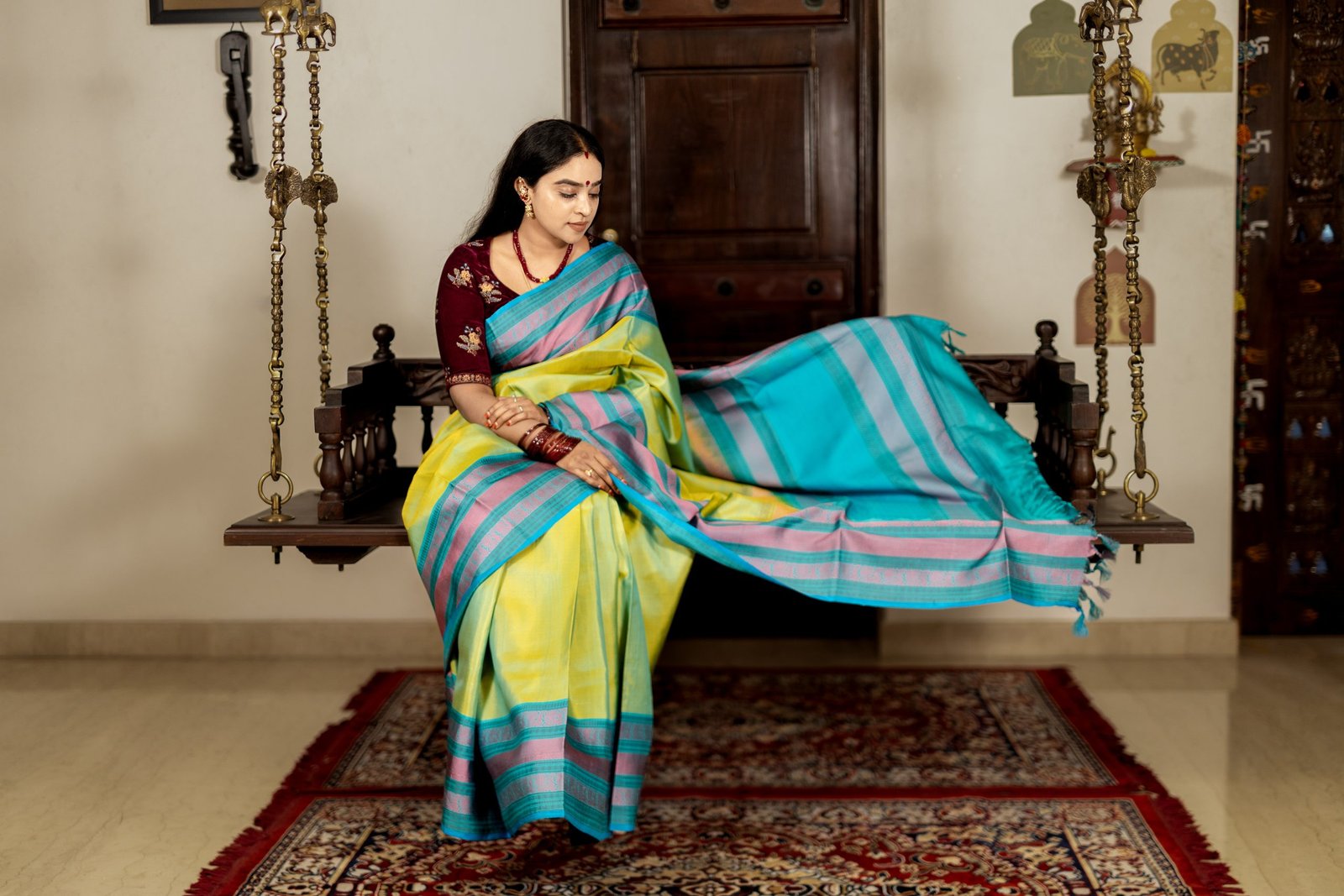
Rooted in Tradition, Crafted for Today
When most people think of sarees, they imagine tradition—but for Amrutha, sarees are a bridge between the past and the present. As the founder of Seelaikaari, Amrutha has transformed her passion for vintage silk into a thriving brand that celebrates India’s rich handloom heritage while empowering the artisans behind it. From the glimmering threads of Kanjeevaram silks to designs inspired by screen legends like Saroja Devi, Jayapradha and Sridevi, every piece tells a story. In a world racing toward fast fashion, Amrutha’s vision is refreshingly deliberate: to make exquisite, handcrafted sarees accessible to a modern audience, without ever compromising on the legacy and craftsmanship that make them timeless. By Sunethra Selvam Seelaikaari stands as a quiet but compelling reminder of the artistry woven into India’s cultural fabric. Rooted in the timeless elegance of handwoven sarees, the brand partners with master artisans across the country to revive techniques passed down through generations. What emerges from their looms is more than clothing—it’s a celebration of heritage, craftsmanship, and the enduring allure of tradition reimagined for the modern woman. Here is an interesting extract of a conversation had with the founder. Q: Your journey with Seelaikaari began with a love for sarees. Can you tell us how that passion evolved into a full-fledged brand? A: Seelaikaari really began with my mother’s sarees and my childhood memories around them. I grew up admiring her sarees, her style, and the way she embraced tradition. She has always loved dressing up and watching her sparked my own fascination with silk sarees and the stories they carry. That early admiration shaped my desire to build something rooted in tradition and craftsmanship. And it was my husband who encouraged me to turn that passion into a business—so that’s how Seelaikaari came to life. Q: Tell us a little about yourself.A: I’m from Chennai, and in every sense, I’m a true Chennai girl. I completed my degree in Visual Communication, and I’ve always been drawn to design. In the beginning, I imagined starting my own boutique, but like many girls, life took a different turn—my parents got me married, and that marked the start of a whole new chapter for me. Q: Was there a particular moment or experience that made you realize you wanted to focus on vintage and handloom sarees?A: For me, a saree is an emotion—so much more than just an outfit. It’s woven into every stage of a woman’s life. When a girl enters womanhood, it begins with a saree. Weddings, baby showers, and every auspicious moment are marked with sarees. Even the gifts we exchange during these occasions are usually sarees, not western wear. I’ve always felt deeply connected to tradition, so choosing to work with vintage and handloom sarees felt natural and close to my heart. Q: Do you remember the first time you wore a saree? How did you feel? We’d love to hear that memory.A: My very first saree was one of my mother’s. As a child, I loved pretending to be a teacher—so I’d drape her saree, hold a ruler, and act out the role with full enthusiasm. It was my favourite game. But the first time I officially wore a saree was during the rituals and celebrations that mark a girl’s puberty. That moment felt special and meaningful, almost like a rite of passage into a new phase of life. Q: Your brand celebrates heritage textiles. What does preserving these traditional weaves mean to you personally?A: Today, many people are moving toward power loom fabrics, so I feel it’s important to create awareness about handlooms. Weaving a saree is no simple task—it usually takes three to four artisans and nearly 15 days to complete one piece. And for techniques like Korvai weaving, the effort and time required can easily double. Unlike power looms where machines take over the work, handloom weaving depends entirely on human skill. It’s a craft that sustains the livelihoods of many families. For me, preserving these traditional weaves is about supporting those artisans and keeping our textile heritage alive. Q: How do you balance staying true to tradition while also appealing to modern fashion sensibilities?A: To me, traditional and modern styles are two different worlds, but they can coexist beautifully. My personal preference will always lean toward the traditional, especially sarees—but that doesn’t mean I don’t enjoy wearing western or contemporary outfits too. I believe you can embrace modern fashion while still staying rooted in tradition. For me, tradition holds deep meaning, and it naturally becomes the foundation of my work. Q: Supporting weavers is clearly close to your heart. How do you ensure your brand uplifts the artisans behind each piece?A: When I started this brand, I made a conscious decision never to use power looms. While power looms are faster and more commonly chosen today, I knew I wanted Seelaikaari to stand firmly with the weaving community. My focus has always been on encouraging handlooms and supporting the families whose lives depend on this craft. By choosing vintage recreations and traditional techniques, I not only honour our heritage but also help sustain the livelihoods of the artisans who keep these traditions alive. Q: Your USP is creating pieces that are truly unique and one of a kind, and I’m sure that comes with its own challenges. How do you deal with that?A: It definitely isn’t easy. At Seelaikaari, we recreate only one piece from each saree, which ensures exclusivity—but it also means every creation takes a significant amount of time and effort. Many people don’t always understand the process behind it, and naturally, the pricing ends up being on the higher side because of the craftsmanship involved. Despite the challenges, I choose to keep it this way because uniqueness and authenticity are at the core of what Seelaikaari stands for. Q. Ensuring access to high-quality handloom sarees must come with its share of challenges—especially today, with so much choice and variety available. How do you navigate that?” A. It is definitely one
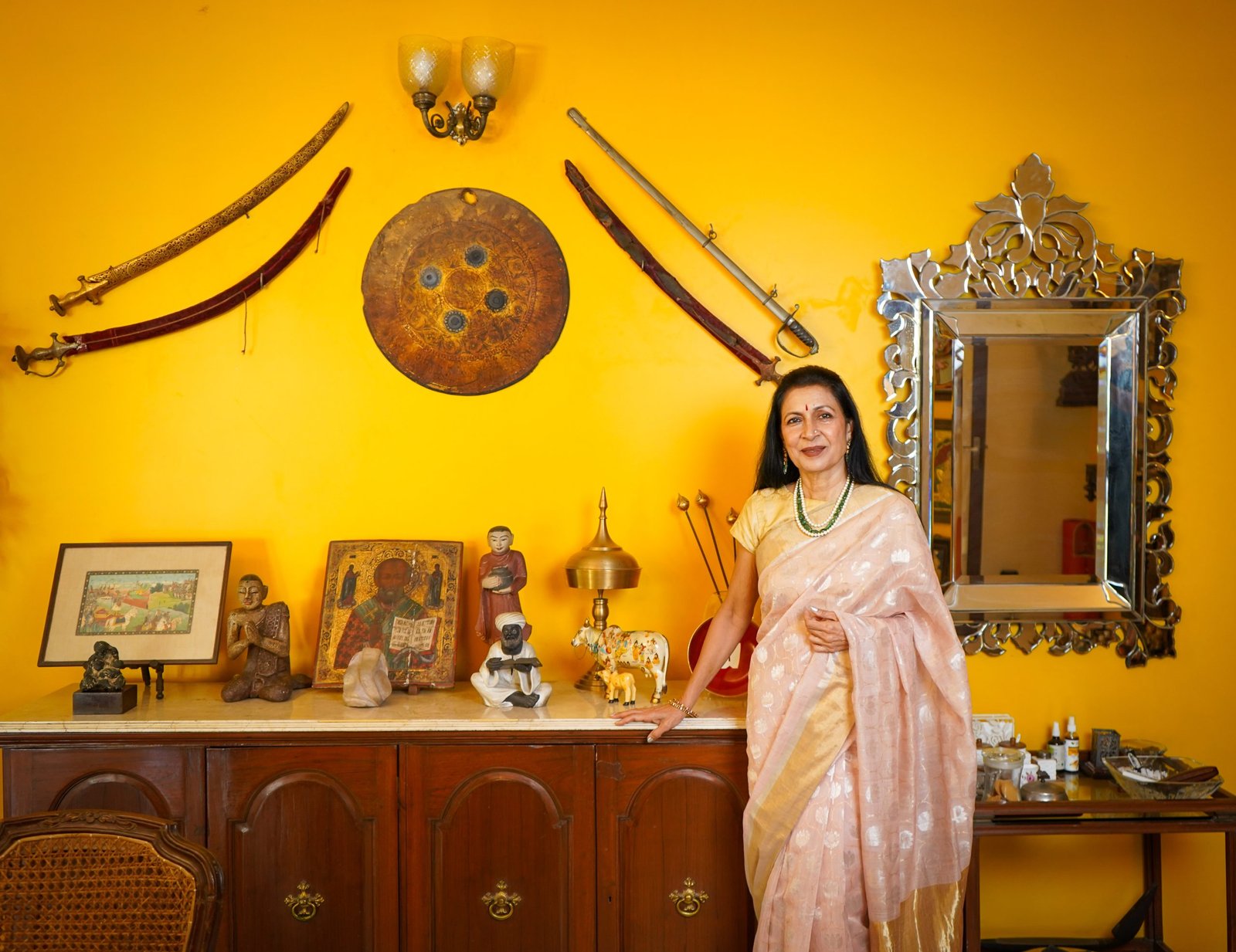
Elegance in Motion: A 21st-Century Royal
In a world where legacy often lives behind closed palace doors, Princess Vidya Gajapathi Raju Singh of Vijayanagaram has gracefully carried her heritage into the present—with poise, purpose, and panache. Born into one of India’s historic princely states, Vidya has not only preserved the elegance of her lineage but redefined it through a life of dynamic pursuits. Whether she’s summiting Himalayan peaks, acing tennis matches, bicycling across cityscapes, or curating dream weddings through her company Sumyog, her sense of style remains a seamless fusion of tradition and modernity. A Vogue-recognized fashion icon, columnist, fitness enthusiast, philanthropist, and travel blogger—Vidya is the epitome of a 21st-century royal. In this exclusive conversation, she opens up about the evolution of royal fashion, the role of elegance in today’s world, and what it means to dress—and live—with intention. By Hussain Ahmed and Sunethra Selvam Personal Journey & Legacy 1.Could you give us a little history of your royalty? Vijayanagaram, once a princely state, lies along the eastern coast of Northern Andhra Pradesh. My father, Vishveshwar Gajapathi Raju, belonged to this illustrious lineage. His elder brother, Vijayaram Gajapathi Raju, was the last coronated Maharaja of Vijayanagaram, ascending the throne in 1945, just before India’s Independence. Ours is a unique heritage — we are the only Rajput royal family in South India, tracing our ancestry to the Sisodia Rajput Suryavanshi line. The present head of the family, my cousin Ashok Gajapathi Raju, continues the legacy of public service. The Gajapathi Raju family has been active in politics since Independence, and Ashok now serves as the Governor of Goa.” 2.You come from the illustrious royal family, yet you’ve carved out an identity rooted in modernity, independence, and service. How have you balanced the weight of heritage with your personal ambitions and choices? “This really goes back to my father, who was a strict disciplinarian and instilled in us a deep sense of balance. While he taught us to take pride in our heritage, he also emphasized the importance of fitness, sports, and academics. We were encouraged to lead disciplined, grounded lives. We were born after Independence, so we didn’t grow up in the traditional royal way. Our upbringing was modern, practical, and focused on self-reliance, even as we remained aware of the legacy we came from.” Memories of Royalty and Childhood 3.You were born into the royal family of Vijayanagaram— a lineage rich in culture, tradition, and history. What are some of your fondest memories from your younger days as a princess? “I actually grew up in Madras, where I went to school at Church Park and later to college at Stella Maris. But my fondest memories are from our holidays. Summers in our Ooty estate on Elk Hill were simply magical — surrounded by misty hills, sprawling gardens, and endless days of laughter. We also spent time in Bangalore, where we had another home that became a lively meeting point for family and friends. Visits to Vijayanagaram were always special. We stayed at the Phool Bagh Palace and spent time with our cousins, exploring the grounds and making the most of those long vacations. One of my dearest recollections is visiting our great-grandmother at the Fort — those moments felt steeped in history and affection. The temple visits were equally meaningful, as they were family traditions that connected us deeply to our roots and spiritual heritage.” 4.Is there anything from that era — the values, the grace, or the way of life — that you particularly miss today? “As I mentioned, we were post-Independence children, so life for us was quite simple — centered around school, sports, and studies. It was a disciplined, wholesome upbringing rather than a royal one in the traditional sense. When I was sixteen, my parents took us on our first tour of Europe — an experience that opened up a whole new world and broadened our horizons. That said,” she laughs, “I do sometimes wish I had experienced living in a palace! It would have been quite something to have that glimpse of royal grandeur.” Fitness & Sports Spirit 5.You’ve been an athlete since your university days, and you continue to compete at the Masters level. What drives your incredible commitment to physical fitness, and how has sport shaped your resilience in life? “At 72, I still train every single day — fitness is truly a passion and a way of life for me. I like to keep my routine varied and challenging, so each day is dedicated to a different form of exercise: cycling, swimming, weight training, walking, and even ladder climbing. It keeps both the body and mind active and engaged. I’m also hoping to return to tennis soon and to take up horse riding more regularly — both have always been close to my heart. Every year, I participate in swimming competitions at various levels — the National Masters, the Tamil Nadu State Masters, and several inter-club events. Sport has taught me discipline, perseverance, and joy. It has been my constant companion through every phase of life, giving me strength, structure, and a deep sense of purpose.” Trekking & Mountaineering 6.From Yunam Peak to Mount Kilimanjaro, your treks are truly inspiring. What have the mountains taught you about life, solitude, and perseverance? And which summit has tested you the most—physically and emotionally ? My most recent summit was earlier this year, in 2025 — Mount Kilimanjaro in Tanzania. It wasn’t the highest peak I’ve climbed, but it was certainly the most challenging in many ways. Every mountain is a test, not just of physical endurance, but of patience, humility, and inner strength. The mountains have taught me some of life’s greatest lessons. You never ‘conquer’ a mountain — that word simply doesn’t belong in the vocabulary of a climber. I always approach each ascent with deep respect and gratitude, praying to the Universe to grant safe passage — to allow me to reach the summit and return safely. Climbing requires not just fitness, but the strength of
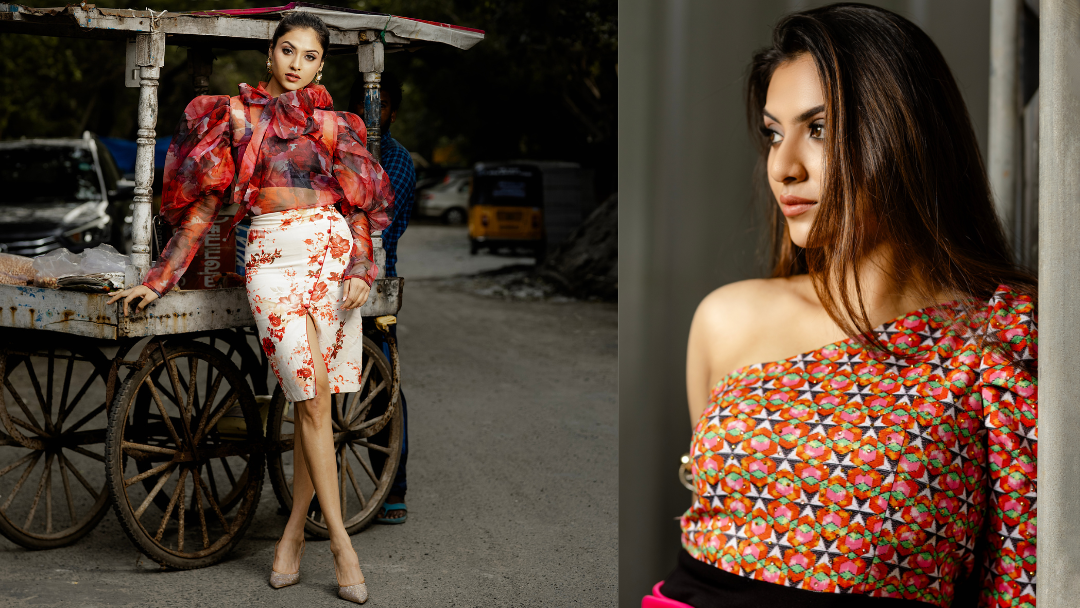
Model of the Month – Dr Sree Advaita
I’m Dr. Sree Advaita—a 24-year-old doctor, dancer, and model shaped by movement, culture, and purpose. Born in Jammu to Tamil–Telugu roots and raised across India as an army kid, I’ve grown up feeling at home everywhere. I see myself as articulate, diligent, opinionated, and always open to growth—traits inspired most by my grandmother, the first literate woman in her village and a celebrated school principal whose courage continues to guide me. In 2016, I received the Junior Scientist Award for developing eco-friendly sanitary napkins and leading awareness drives across Tamil Nadu. A severe spinal injury later tested my resilience, but recovering from it strengthened my resolve and ultimately led me to establish The Aanya Foundation, my NGO focused on women’s health. My name means oneness with the divine, a reminder of purpose. Through Bharatanatyam—with over 600 performances—I found expression; through healthcare innovation, I found impact. My journey, from hospital wards to stage lights and from personal setbacks to community service, is one of reinvention and faith. Today, I stand as a doctor determined to create real, lasting change. My goal is simple: to embrace every role fully and use my voice and work to empower others.Three words that describe me: self-aware, chaotic, and carrying a heart with many windows.

Luxury in Modern Times – Rising Beyond the Crown
Luxury has taken a new form—sleek, soulful, and unmistakably modern. And no one captures this transformation quite like Anukreethy Vas. With her striking presence and powerful narrative, she embodies a new vision of opulence: one defined by meaning over material, and presence over pretence. By Sunethra Selvam Opulence is no longer defined by excess but by meaning, intention, and identity, Anukreethy Vas emerges as the perfect muse for modern opulence. Crowned Femina Miss India 2018 and celebrated for her grace, grit, and grounded authenticity, she represents a new generation that values depth as much as beauty. From her journey as a small-town dreamer to a globally recognized face, she has redefined what aspiration looks like elegant yet effortless, powerful yet profoundly human. In this issue, Anukreethy embodies Luxury in Modern Times: a luxury shaped by self-expression, conscious choices, and the boldness to stand unapologetically as oneself. With her timeless charm and contemporary sensibilities, she reminds us that true luxury today is not what we possess, but who we become. You grew up in Tiruchirappalli and were raised by a strong single mother. How have your early life experiences shaped the woman you are today—both personally and professionally? “I don’t think I’m even half the woman my mother is,” Anukreethy reflects with a smile. “Growing up, I watched her work tirelessly, with a kind of strength and dedication that shaped everything I know about resilience.” She credits her mother for the values that define her today. “If I’m hardworking, if I choose to believe in the good no matter what—it’s because of her. Everything I am, personally and professionally, traces back to my mother’s influence. She is the foundation of it all.” Pursuing a degree in French Literature while navigating modelling, acting, and pageantry is a unique combination. How has this exposure influenced your worldview and the way you express yourself? “I’ve always believed that learning multiple languages opens up the world,” Anukreethy says. “Studying French didn’t just teach me a new way to speak—it gave me the confidence to walk into any room and connect with people from completely different backgrounds.” For her, expression is rooted in knowledge and exposure. “The way you communicate comes from what you’ve learned and understood. That’s something I truly live by.” Winning Femina Miss India 2018 at such a young age is a remarkable achievement. What do you consider the defining moment of your Miss India journey? “Honestly, my Miss India journey was never just mine,” Anukreethy says, her voice softening at the memory. “The very first audition happened only because my friend Luma insisted I accompany her. Everything I carried that day—from my clothes to my confidence—was hers. Even my one-way ticket was booked by my friends.” She pauses, thoughtful. “So, the defining moment for me wasn’t the crown—it was the journey itself. It showed me how good people can be, how selflessly they can lift you up. My friends were the wind behind everything I achieved, and I’ll always give them that credit.” You placed in the Top 30 at Miss World 2018 and performed strongly in multiple segments. What did representing India on a global stage teach you about competition, resilience, and identity? “Hearing my name called out as ‘Miss India’ is a feeling I still get goosebumps thinking about,” Anukreethy recalls. “Standing there among 130 countries—surrounded by women who were all so talented, beautiful, and hardworking—was surreal.” For her, Miss World was never just about competition. “It felt more like a sisterhood than a contest,” she says. “And representing India… that was the greatest honour of all. I’m a deeply patriotic person, so carrying my country’s name—and even more, carrying Tamil Nadu with me on that stage—was incredibly special.” Winning Miss India as a young woman from Tamil Nadu remains one of her proudest milestones. “To represent my state, my country, our culture, and to share who we are with the rest of the world—those are memories I’ll cherish forever. I wouldn’t trade that experience for anything.” You received the ‘Beauty with a Purpose’ award—something not many manage to achieve. How has that platform influenced your social outlook and the causes you continue to champion today? “My ‘Beauty with a Purpose’ journey didn’t begin on a pageant stage—it actually started back in Loyola College,” Anukreethy shares. As part of an outreach program, students were encouraged to engage with communities living in the nearby slums. “That’s where I formed a real connection with the transgender community. I saw their unity, their strength, and the way they protected and uplifted one another.” This early exposure planted the seed for her lifelong purpose. “I didn’t create a project just for Miss World—I already knew what I stood for. I knew exactly what I wanted to speak about if I ever got that platform.” And that purpose continues to guide her. “Even today, every time I’m given a stage or a microphone, I make sure to talk about the communities that shaped my social outlook. That commitment hasn’t changed—and it never will.” What motivated you to support the transgender community and what was your learning from this experience? During our outreach program, I realised how many transgender individuals were living without basic support—no homes, no access to education, and very little acceptance from society,” Anukreethy recalls. What struck her most was the way the community cared for one another. “The older members took on the roles of mothers, daughters, sisters… they had created their own family. Everyone worked, contributed whatever they earned, and entrusted it to one person who made sure the younger ones were educated and found jobs.” She also became aware of the physical and social challenges they faced every single day. “But despite all of that, they radiated so much positivity. They were united, supportive, and incredibly resilient.” The experience was transformative. “It was an awakening for me,” she says. “It made me question what humanity really means. Their strength, unity, and optimism showed me how much we still have
